
The Story of Three Champagne Widows
The history of Champagne Devaux began with Jules and Auguste Devaux in the mid-19th century. However, the most interesting development occurred thanks to three inspiring women who ensured the continuity of the family estate over the following decades. The first Devaux woman was Claude-Josephte Devaux: widowed at the age of 39, she took over the humble family winery and set it on the road to success by founding "Maison Vve A. Devaux" in 1846. Together with her son François-Auguste, she ran the family business for the rest of her life.
When François-Auguste died shortly after his mother, his wife Augusta-Maria inherited the management of the winery in 1879, becoming the second Devaux widow to continue the family business. Thanks to her talent and enthusiasm, the Devaux brand became a flourishing champagne house, gaining in recognition and popularity. She died in 1895, leaving behind a company whose exports accounted for 75% of production by the end of the century.
Charles-Auguste Devaux took over, but fate had planned another turn for Champagne Devaux, and he sadly died a few years later. His wife Marguerite Marie-Louise, the third Devaux widow, took over the management of the winery in 1907, following in the footsteps of the two previous widows, running the estate for over 40 years until her death in 1951, bringing an eventful saga of three widows to a close.
From then on, the story opened up to the men in the family, and his sons took charge of Champagnes Devaux. The last member of the Devaux family to run the estate was Jean-Pol Auguste Devaux. He had no heir or successor in sight as he grew older, but he was looking for a future for the well-established champagne brand his family had built up over so many years.
So, in 1987, he entrusted the brand to Union Auboise and its president Laurent Gillet. Founded in 1967, this winegrowers' cooperative, previously a supplier of the Champagne house's Blanc de Noirs, proudly integrated Champagne Devaux into its cooperative, placing the prestigious brand's name at the top of its structure: Groupe Vinicole Champagne Devaux was born.
At the heart of the Côte des Bar
Following its recent merger with six other Côte des Bar cooperatives in July 2022, the Union Auboise Vignerons en Champagne has 520 members covering over 1,060 hectares of vineyards in the Aube region, and continues to protect the identity of its winegrowers and defend the recognition of their precious terroirs. The cooperative sells wine to numerous champagne houses, but keeps the lion's share: its best grapes and musts for its own high-quality production under the Champagne Devaux name.
With the heart of the cooperative anchored in the Aube region, Champagne Devaux is committed to working the two grape varieties typical of its terroirs: Pinot Noir, the major grape variety of the Côte des Bar, and Chardonnay. The Chardonnay used in their production comes either from the great terroirs of Montgueux - a very expressive Chardonnay terroir that many champagne houses would like to have in greater quantity - or they also source Chardonnay from the Côte des Blancs to bring more tension, freshness or length to the blends.
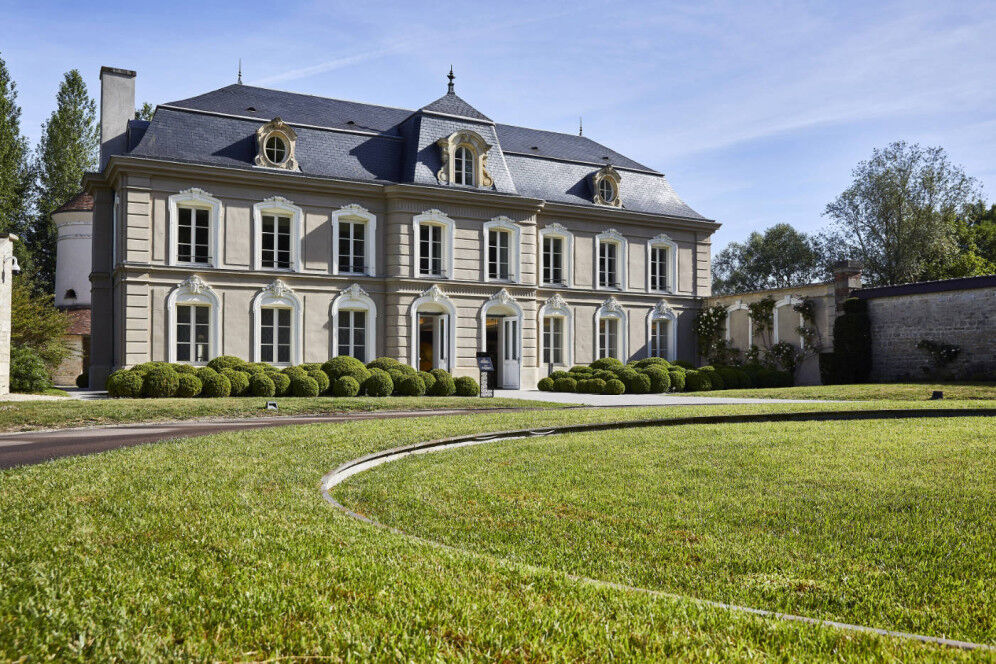
Aware that only good grapes will produce excellent champagne, they have developed high standards for their production and implemented quality measures early on. One of the most fundamental of these was the Charte de Travail, which includes a long list of viticultural requirements that sensitize cooperative members to apply proper techniques in the vineyards and to take environmental responsibility. In addition, the cooperative has set up a team of viticultural consultants who follow and advise winegrowers throughout the year, helping them to find the best solutions for their challenges and overseeing the difficulties of each vintage on a larger scale.
The D Collection
Cellar master Michel Parisot has been with the Champagne house for over 30 years, playing an important role in the constant quest for quality, from vineyard to cellar. At the turn of the millennium, he created the emblematic Collection D, the centerpiece of the Devaux champagne range, by seeking out single-vineyard selections for his cuvées, which was still a new concept in Champagne at the time.
Armed with his vision of high-quality champagne, he convinced the growers of the plots chosen for Collection D to follow even more precise guidelines, for example, no weeding and no use of pesticides. In return, their extra efforts were (and still are) rewarded with bonuses to encourage a collective move towards better quality.
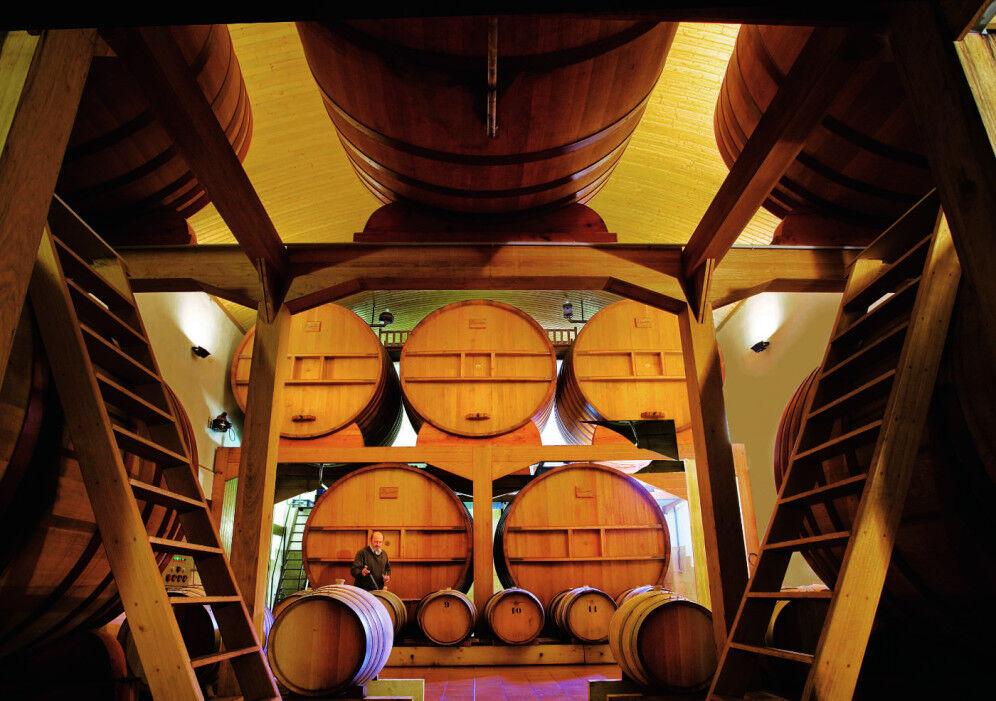
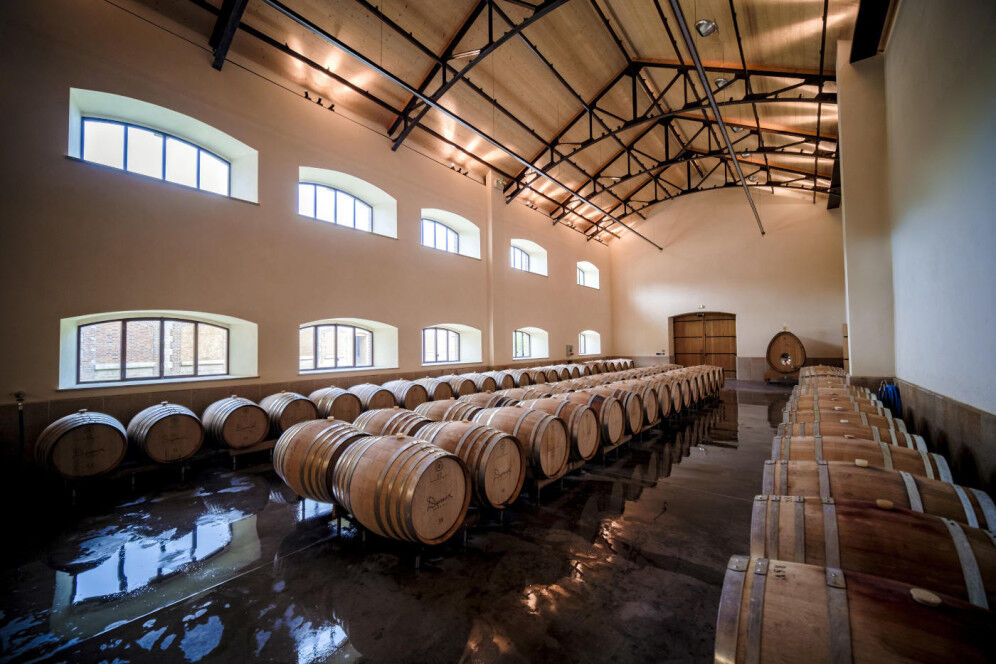
In addition, Michel Parisot pushed for the introduction of large oak barrels for reserve wines, as well as a new barrel room which was used for the first time for the 2021 vintage.
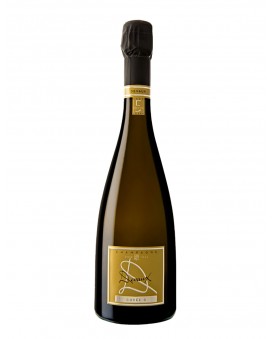
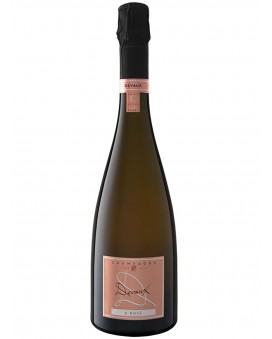
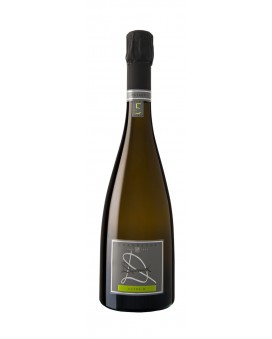
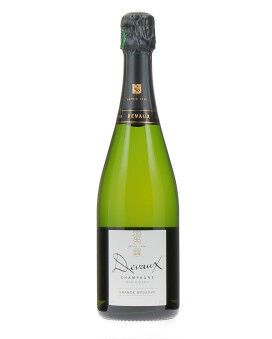
The D collection is made using only the best press fragments, also known as cœur de cuvée, a particularly pure and noble part of the pressed must. The collection comprises four cuvées: Cuvée D Brut, Ultra D Extra-brut, D Rosé Brut and D Millésimé Brut. The three non-vintage blends in Collection D undergo prolonged aging on lees for a minimum of 5 years for the classic bottle format, or 7 years for magnums or jeroboams, while Cuvée D Millésimée spends 10 years or more on lees. After such time in the cellar, Collection D champagnes have a rich mouthfeel, great complexity and a smooth, creamy mousse, making them ideal partners for a wide variety of gastronomic ideas.
Terroirs de Coeur
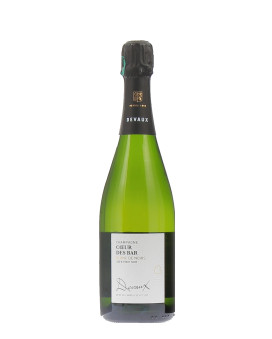
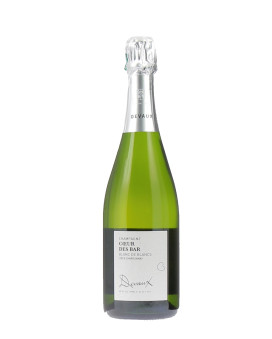
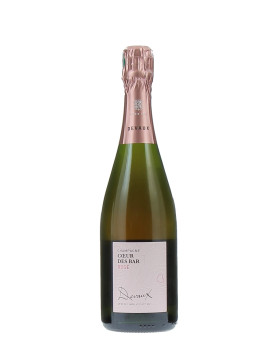
In addition to Collection D and its traditional Les Classiques line, Champagne Devaux has also recently added a Terroirs de Cœur line. With the aim of presenting a modern line of expressive wines from the Côte des Bar, three new cuvées have been launched under its roof: Cœur des Bar Blanc de Noirs Brut made from 100% Pinot Noir, Cœur des Bar Blanc deBlancs with 100% Chardonnay, and finally Cœur de Nature Brut, a predominantly Pinot Noir blend made from 100% organically grown grapes.
With the launch of their first organic cuvée, Champagne Devaux is looking to the future: 50 hectares of vineyards have already obtained organic certification, and a further 50 hectares are currently in conversion. Aware of the need for more sustainable agriculture in cooperative structures, they are determined to preserve their Terroirs de Coeur by moving towards more sustainable viticultural practices and vineyards, plot by plot, and to set an example for other cooperatives.
The Jewel of the House: Cuvée Sténopé
And then there's another gem: Cuvée Sténopé. Seeking to capture the unique character of each vintage, cellar master Michel Parisot has crafted this prestigious champagne in collaboration with legendary Rhône Valley winemaker Michel Chapoutier. The grapes are harvested from Michel Parisot's favorite Pinot Noir and Chardonnay plots, and the wines are vinified by gentle pressing, partial barrel fermentation and extended aging on lees. So far, the 2008, 2009, 2010 and Sténopé 2011 vintages have been captured as part of this strictly limited series, of which only 6,387 bottles were produced in 2011.
Of course, you can find all these superb bottles in our boutique to discover the range of Devaux champagnes and their interpretation of the Côte des Bar.