- Abelé 1757
- Agrapart
- Alfred Gratien
- Apollonis
- AR Lenoble
- Armand de Brignac
- Ayala
- Barons de Rothschild
- Beaumont des Crayères
- Benoît Lahaye
- Bergeronneau Marion
- Besserat De Bellefon
- Billecart - Salmon
- Blin
- Bollinger
- Bruno Paillard
- Canard Duchene
- Castelnau
- Cattier
- Charles Collin
- Charles Heidsieck
- Chartogne-Taillet
- Chassenay d'Arce
- De Saint Gall
- De Sousa
- De Venoge
- Delamotte
- Demoiselle
- Deutz
- Devaux
- Diamant Vranken
- Dom Perignon
- Drappier
- Duval - Leroy
- Egly-Ouriet
- Epc
- Fleury
- Gosset
- Heidsieck & Co Monopole
- Henri Giraud
- Henriot
- Jacquart
- Jacquesson
- Jean-Noel Haton
- Joseph Perrier
- Konrat
- Krug
- Lafitte
- Laherte
- Lallier
- Lanson
- Larmandier-Bernier
- Laurent-Perrier
- Leclerc Briant
- Lombard
- Mailly Grand Cru
- Moet Et Chandon
- Montaudon
- Moussé Fils
- Mumm
- Napoleon
- Nicolas Feuillatte
- Pannier
- Paul Goerg
- Perrier Jouet
- Philipponnat
- Pierre Gimonnet
- Piper - Heidsieck
- Pol Roger
- Pommery
- Rare Champagne
- Louis Roederer
- Ruinart
- Salon
- Selosse
- Soutiran
- Taittinger
- Thienot
- Tsarine
- Veuve Clicquot
- Veuve Lanaud
Delamotte Champagne

Founded in Reims in 1760 by François Delamotte, this House is a real reference thanks to the constant quality of its champagnes, but also to its respect for the terroir from Mesnil-sur-Oger, Oger, Avize, and Cramant: the famous Côte des Blancs.
Very marked by this Chardonnay grape variety, Delamotte champagnes are therefore airy and of great finesse. Note that Delamotte is part of the same group as Salon, a very prestigious company. Discover the whole range of Delamotte champagnes, from the blanc de blancs to the rosé, including the blanc de blancs vintage and the brut.
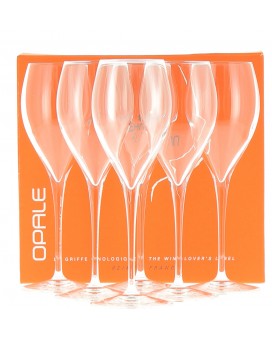
Champagne Delamotte Six flûtes
There's nothing more stylish than drinking champagne in an elegant champagne flute.28,00 €In stock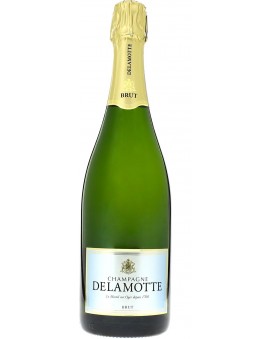
Champagne Delamotte Brut 75cl
Champagne Brut from Maison DELAMOTTE is a very elegant champagne, thanks to the high proportion of Chardonnay Grands Crus from...35,00 € from 6 37,00 € unitIn stock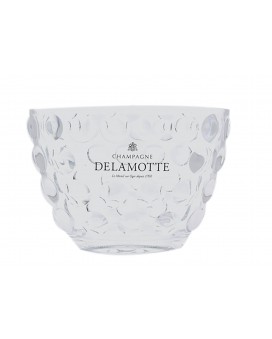
Champagne Delamotte Bubbles bucket
The champagne House Delamotte leads us night and day in the universe of party, and is proud to introduce a superb champagne...39,00 €Temporarily out of stock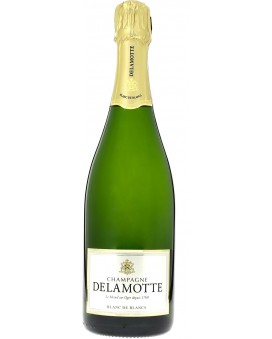
Champagne Delamotte Blanc de Blancs 75cl
Champagne blanc de blancs DELAMOTTE is exclusively elaborated from Chardonnay sourced from Grands Crus of the Côte des Blancs.53,00 €Order limited to 36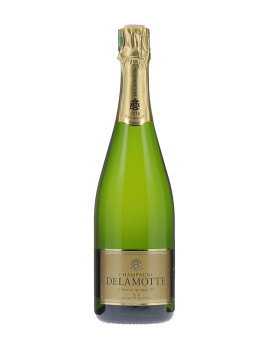
Champagne Delamotte Blanc de Blancs 2018 75cl
Champagne Blanc de Blancs 2018 from Maison Delamotte is exclusively sourced from Grands Crus chardonnays from the Côte des...73,00 €In stock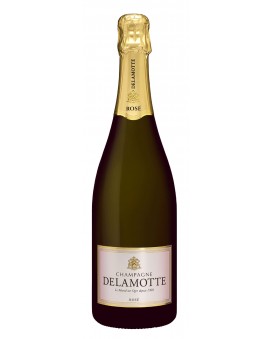
Champagne Delamotte Rosé 75cl
DELAMOTTE's rosé champagne is a very delicate rosé that expresses itself with finesse.75,00 €In stock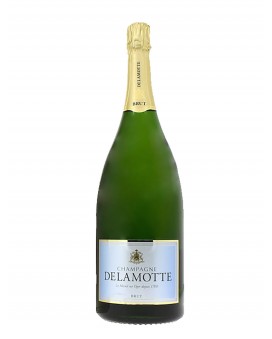
Champagne Delamotte Brut Magnum 150cl
Champagne Brut from Maison DELAMOTTE is a very elegant champagne, thanks to the high proportion of Chardonnay Grands Crus from...79,00 €In stock Only 5 left!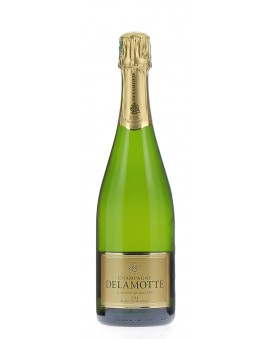
Champagne Delamotte Blanc de Blancs 2014 75cl
Champagne Blanc de Blancs 2014 from Maison Delamotte is exclusively sourced from Grands Crus chardonnays from the Côte des...79,00 €Sold out soon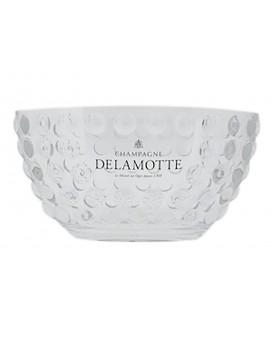
Champagne Delamotte Large bubbles bucket
The champagne House Delamotte leads us night and day in the universe of party, and is proud to introduce a superb large...129,00 €Temporarily out of stock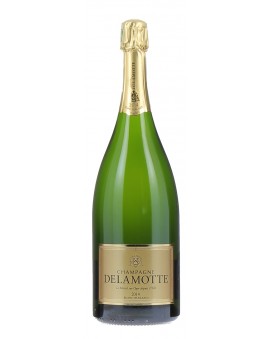
Champagne Delamotte Blanc de Blancs 2014 magnum 150cl
Champagne Blanc de Blancs 2014 from Maison Delamotte in magnum is exclusively sourced from Grands Crus chardonnays from the...188,00 €In stock
Champagne DELAMOTTE
This is a two hundred years champagne house, the fifth-largest champagne houses in order of seniority, based in Reims in 1760 by Francois Delamotte, and since 1989, acquired by Laurent-Perrier. Ranked 17th in the list of the best champagne houses in the “Revue du Vin de France” magazine, this small champagne house (less than 500,000 bottles a year) seduces all the lovers of Champagne Blanc de Blancs. Delamotte Champagne house is specialized in champagne for aperitif moments.
This is the little sister of the legendary Champagne Salon and is directed by the same director. Like Salon, the Delamotte champagne house is, above all, the true Chardonnay specialist.
The range of Champagne Delamotte, very homogeneous, consists mostly of Brut champagne, but also of Champagne Blanc de Blancs, vintage Blanc de Blancs, and finally, Rosé champagne.
Trusted Reviews
97% of satisfied customers Shipping 24H
Order before 11AM Gift Message
free + 1200 références
in stock Storage
Hydro-regulated Secure Payment
Credit Card, Amex, Paypal, Bank transfer 
Interdiction de vente de boissons alcooliques aux mineurs de moins de 18 ans.
La preuve de majorité de l’acheteur est exigée au moment de la vente en ligne
Code de la santé publique.Art L.3342-1 et L.3353-3