- Abelé 1757
- Agrapart
- Alfred Gratien
- Apollonis
- AR Lenoble
- Armand de Brignac
- Ayala
- Barons de Rothschild
- Beaumont des Crayères
- Benoît Lahaye
- Bergeronneau Marion
- Besserat De Bellefon
- Billecart - Salmon
- Blin
- Bollinger
- Bruno Paillard
- Canard Duchene
- Castelnau
- Cattier
- Charles Collin
- Charles Heidsieck
- Chartogne-Taillet
- Chassenay d'Arce
- De Saint Gall
- De Sousa
- De Venoge
- Delamotte
- Demoiselle
- Deutz
- Devaux
- Diamant Vranken
- Dom Perignon
- Drappier
- Duval - Leroy
- Egly-Ouriet
- Epc
- Fleury
- Gosset
- Heidsieck & Co Monopole
- Henri Giraud
- Henriot
- Jacquart
- Jacquesson
- Jean-Noel Haton
- Joseph Perrier
- Konrat
- Krug
- Lafitte
- Laherte
- Lallier
- Lanson
- Larmandier-Bernier
- Laurent-Perrier
- Leclerc Briant
- Lombard
- Mailly Grand Cru
- Moet Et Chandon
- Montaudon
- Moussé Fils
- Mumm
- Napoleon
- Nicolas Feuillatte
- Pannier
- Paul Goerg
- Perrier Jouet
- Philipponnat
- Pierre Gimonnet
- Piper - Heidsieck
- Pol Roger
- Pommery
- Rare Champagne
- Louis Roederer
- Ruinart
- Salon
- Selosse
- Soutiran
- Taittinger
- Thienot
- Tsarine
- Veuve Clicquot
- Veuve Lanaud
Canard Duchene Champagne

The House of Canard-Duchêne, founded by Victor Canard and Léonie Duchêne, has been located since its creation in 1868 in Ludes, in the Montagne de Reims. Internationally renowned and a member of the court of Tsar Nicolas II, it has recently joined the Alain Thiénot Group, and today occupies a place of choice on the French and European markets.
In 2004, Canard Duchêne committed itself to sustainable development and respect for the environment, thus promoting its hillsides, its cellars and its House, which has been listed as a UNESCO World Heritage Site since 2013.
The Canard Duchêne brand offers several cuvées of authentic, fruity and intense champagne to be enjoyed during your aperitifs.
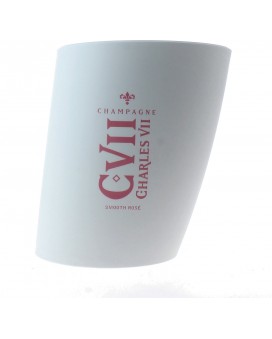
Champagne Canard Duchene Smooth Bucket
Treat yourself with this superb "Smooth" champagne bucket from Canard Duchêne.28,00 €In stock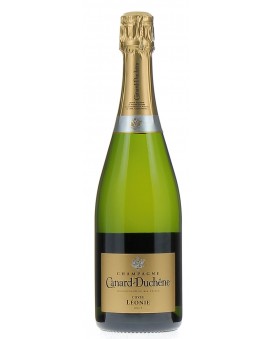
Champagne Canard Duchene Cuvée Léonie Brut 75cl
Cuvée Léonie is a tribute to the winemaker Léonie Duchêne, whose wedding to the cooper Jérôme Canard, resulted in the...31,00 €In stock
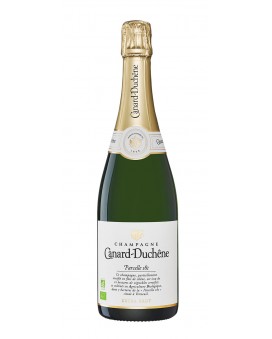
Champagne Canard Duchene Parcelle 181 75cl
The Cuvée Parcelle 181 of the Maison Canard-Duchêne is an Extra-Brut champagne extra-brut and is aged in cellars for nearly...34,00 €In stock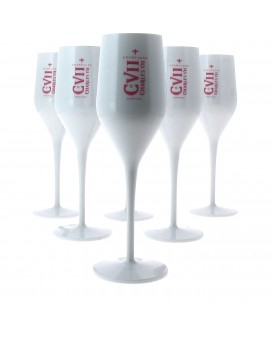
Champagne Canard Duchene Smooth flûtes
Treat yourself with these 6 superb "'Smooth" champagne flutes from Canard Duchêne.35,00 €In stock- Special offer !
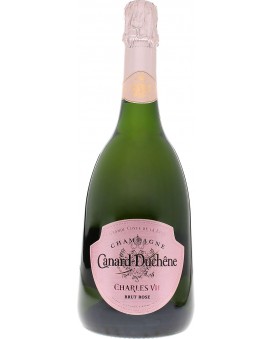
Champagne Canard Duchene Cuvée Charles VII Rosé 75cl
Canard-Duchêne’s Grande Cuvée de la Rose Charles VII rosé is mainly elaborated from Grands Crus and Premiers Crus, and benefits...36,00 €instead of 42,00 €In stock - Special offer !
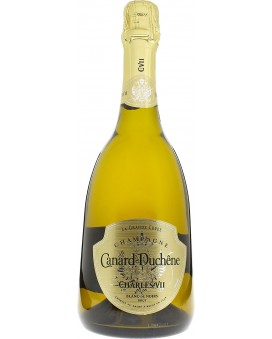
Champagne Canard Duchene Cuvée Charles VII Blanc de Noirs 75cl
Made from black grape varieties sourced exclusively in Montagne de Reims (70% Pinots Noirs and 30% Pinots Meuniers), the Grande...36,00 €instead of 42,00 €In stock 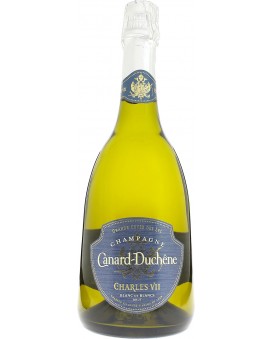
Champagne Canard Duchene Cuvée Charles VII Blanc de Blancs 75cl
The Grande Cuvée des Lys Charles VII Blanc de blancs from Canard-Duchêne is an exceptional cuvée which expresses the richness,...42,00 € from 6 44,00 € unitIn stock
CANARD DUCHENE Champagne
An exceptional site
While the majority of leading Champagne houses are located in the urban setting of Reims or Epernay, Canard-Duchêne is unusually situated in Ludes, on a hillside, at the very heart of the Montagne de Reims vineyards. Located within the limits of the most prestigious terroirs, Ludes epitomises the magnificence of Pinot noir cultivated in Champagne. With its exceptional setting, Canard-Duchêne is a brand firmly rooted in the vineyard, synonymous with the fruit of the land, and deeply respectful of the local environment.
A gift of nature
The regional natural park of Montagne de Reims combines vines and forests, rare trees and wild fauna, and is a truly exceptional setting.
The Montagne de Reims is a plateau overlooking the Marne Valley and provides the vine with unique soils, the result of more than 70 million years of evolution and the unity of chalk, sand, clay and limestone. Nature provides Canard-Duchêne with a unique environment, from which it draws its richness and winemaking heritage.
The simplicity of a family tradition
Victor Canard, a cooper, and Léonie Duchêne, originally hailing from a family of winegrowers, meet in Ludes. Devoted to one another, they are married in 1860. Champagne is their passion and in 1868 they set up their own vineyard, in the true Champagne tradition. Canard-Duchêne, family-focused and independent from the outset, is still owned today by a family dedicated to the wine and its wines.
Trusted Reviews
97% of satisfied customers Shipping 24H
Order before 11AM Gift Message
free + 1200 références
in stock Storage
Hydro-regulated Secure Payment
Credit Card, Amex, Paypal, Bank transfer 
Interdiction de vente de boissons alcooliques aux mineurs de moins de 18 ans.
La preuve de majorité de l’acheteur est exigée au moment de la vente en ligne
Code de la santé publique.Art L.3342-1 et L.3353-3