- Abelé 1757
- Agrapart
- Alfred Gratien
- Apollonis
- AR Lenoble
- Armand de Brignac
- Ayala
- Barons de Rothschild
- Beaumont des Crayères
- Benoît Lahaye
- Bergeronneau Marion
- Besserat De Bellefon
- Billecart - Salmon
- Blin
- Bollinger
- Bruno Paillard
- Canard Duchene
- Castelnau
- Cattier
- Charles Collin
- Charles Heidsieck
- Chartogne-Taillet
- Chassenay d'Arce
- De Saint Gall
- De Sousa
- De Venoge
- Delamotte
- Demoiselle
- Deutz
- Devaux
- Diamant Vranken
- Dom Perignon
- Drappier
- Duval - Leroy
- Egly-Ouriet
- Epc
- Fleury
- Gosset
- Heidsieck & Co Monopole
- Henri Giraud
- Henriot
- Jacquart
- Jacquesson
- Jean-Noel Haton
- Joseph Perrier
- Konrat
- Krug
- Lafitte
- Laherte
- Lallier
- Lanson
- Larmandier-Bernier
- Laurent-Perrier
- Leclerc Briant
- Lombard
- Mailly Grand Cru
- Moet Et Chandon
- Montaudon
- Moussé Fils
- Mumm
- Napoleon
- Nicolas Feuillatte
- Pannier
- Paul Goerg
- Perrier Jouet
- Philipponnat
- Pierre Gimonnet
- Piper - Heidsieck
- Pol Roger
- Pommery
- Rare Champagne
- Louis Roederer
- Ruinart
- Salon
- Selosse
- Soutiran
- Taittinger
- Thienot
- Tsarine
- Veuve Clicquot
- Veuve Lanaud
Veuve Clicquot Champagne


The famous Barbe-Nicole Ponsardin, nicknamed "the Veuve Clicquot", acquired, after the death of her husband in 1805, some of the best vines, constituting an exceptional wine-growing heritage which today covers 515 hectares.
The "grande dame of Champagne" also innovated by creating the first blended rosé champagne. Since 1877, the House of Veuve Clicquot has dressed its bottles with a recognizable orange-yellow label, with an anchor, symbol of hope, as a logo.
At Clicquot, the style is anchored by the Pinot Noir grape, which gives birth to some of the most prestigious champagnes. Veuve Clicquot Champagnes are fruity, harmonious, chic. Flasks of gastronomy par excellence, for which the motto of the House is: "Only one quality, the very first".
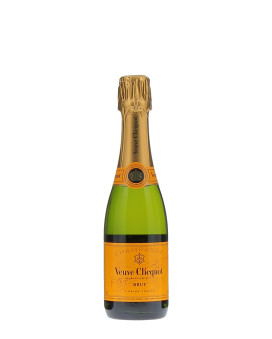
Champagne Veuve Clicquot Yellow Label half bottle 37,5cl
Champagne Yellow Label from VEUVE CLICQUOT is their most famous cuvée, worldwide acclaimed.28,00 €In stock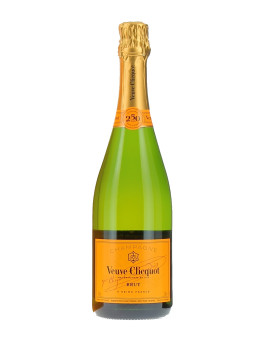
Champagne Veuve Clicquot Carte Jaune 75cl
Champagne Yellow Label from VEUVE CLICQUOT is their most famous cuvée, worldwide acclaimed.46,00 €In stock- Limited Edition
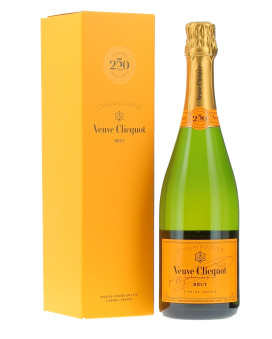
Champagne Veuve Clicquot Yellow Label 250th Anniversary Edition 75cl
Champagne Yellow Label from VEUVE CLICQUOT is their most famous cuvée, worldwide acclaimed.48,00 €In stock - New !
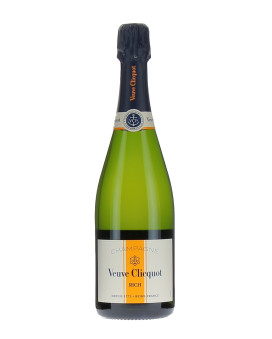
Champagne Veuve Clicquot Rich 75cl
Discover the new version of Cuvée Rich from Veuve Clicquot: a cuvée that combines fruity and fresh flavours for even more...54,00 €In stock 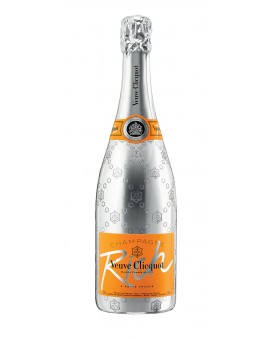
Champagne Veuve Clicquot Rich 75cl
Discover Rich: a champagne with a sweeter dosage, to be enjoyed any time of day, any time of year.56,00 €Sold out soon Only 5 left!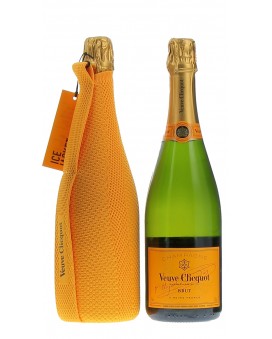
Champagne Veuve Clicquot Brut Ice Jacket 75cl
Discover the worldwide iconic cuvée from Maison Veuve Clicquot : Brut Carte Jaune and its special edition of the Ice Jacket.58,00 €In stock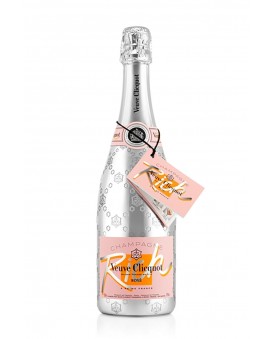
Champagne Veuve Clicquot Rich Rosé 75cl
Discover Rich Rosé: a rosé champagne with a sweeter dosage, to be enjoyed any time of day, any time of year.58,00 €Sold out soon Only 4 left!- Limited Edition
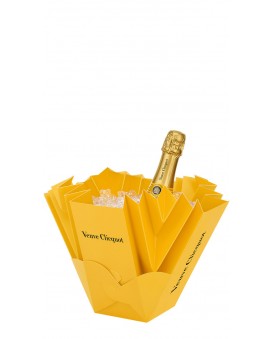
Champagne Veuve Clicquot Brut Carte Jaune Ice Box 75cl
Discover the Champagne Brut Carte Jaune by VEUVE CLICQUOT in an Ice Box, the House's signature champagne, presented in a case...58,00 €Sold out soon Only 1 left! - New !
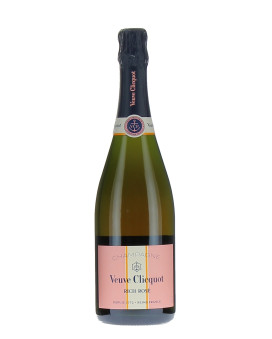
Champagne Veuve Clicquot Rich Rosé 75cl
Discover the new version of Veuve Clicquot's Rich Rosé cuvée: a rosé champagne with a new, sweeter dosage, to be enjoyed any...58,00 €In stock 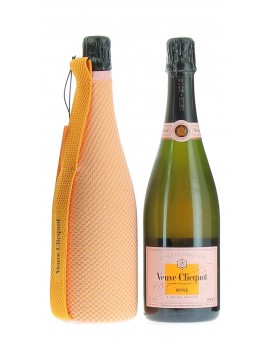
Champagne Veuve Clicquot Rosé Ice Jacket 75cl
Discover VEUVE CLICQUOT's Rosé champagne presented in its innovative isothermal Ice Jacket, thanks to a 3D sewing process.64,00 €In stock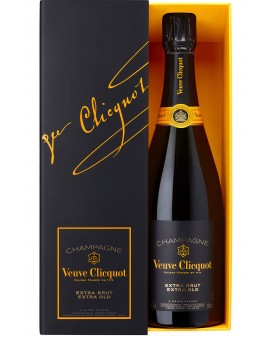
Champagne Veuve Clicquot Extra-Brut Extra old 75cl
Cuvée Extra Brut Extra Old from VEUVE CLICQUOT explores new wine making territories.65,00 €In stock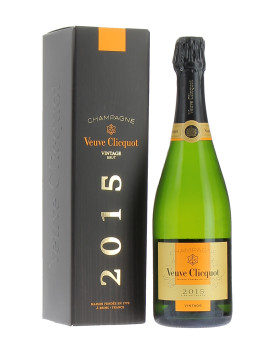
Champagne Veuve Clicquot Vintage 2015 75cl
Maison VEUVE CLICQUOT's 2015 Vintage Champagne is a great champagne that is both concentrated and structured.65,00 €In stock- Limited Edition
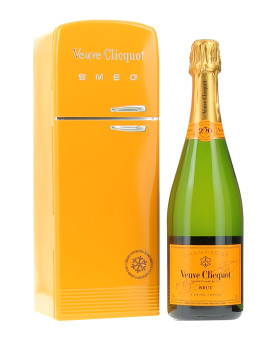
Champagne Veuve Clicquot Yellow Label Fridge Smeg Edition 75cl
VEUVE CLICQUOT's Carte Jaune champagne is the House's signature champagne, here in a limited edition box shaped like a...69,00 €Temporarily out of stock 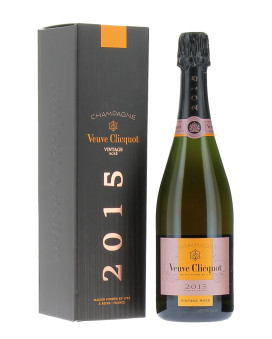
Champagne Veuve Clicquot Vintage Rosé 2015 75cl
Veuve Clicquot Vintage Rosé 2015 is an expression of the House's boldness and creativity.76,00 €In stock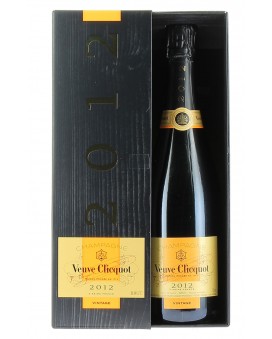
Champagne Veuve Clicquot Vintage 2012 75cl
This Vintage 2012 from VEUVE CLICQUOT expresses the intense and powerful expression of this exceptional vintage! This great...83,00 €Sold out soon Only 3 left!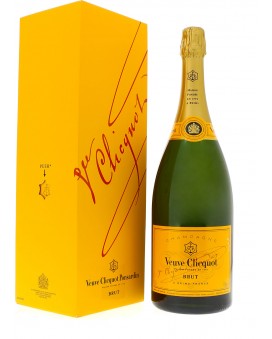
Champagne Veuve Clicquot Carte Jaune Magnum 150cl
Champagne Carte Jaune from VEUVE CLICQUOT is their most famous cuvée, worldwide acclaimed.114,00 €In stock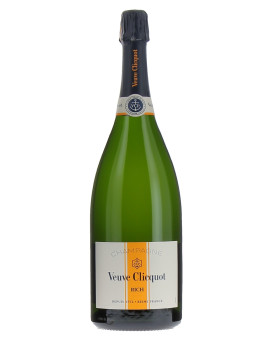
Champagne Veuve Clicquot Rich Magnum 150cl
Discover the new version of Cuvée Rich from Veuve Clicquot: a cuvée that combines fruity and fresh flavours for even more...126,00 €In stock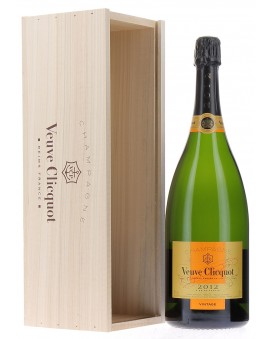
Champagne Veuve Clicquot Vintage 2012 Magnum 150cl
Champagne Vintage 2012 from VEUVE CLICQUOT in magnum perfectly embodies the intense and powerful expression of this exceptional...179,00 €Sold out soon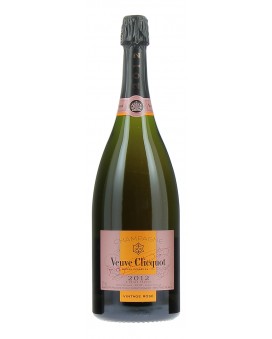
Champagne Veuve Clicquot Vintage Rosé 2012 Magnum 150cl
The Vintage Rosé 2012 from Maison Clicquot is the expression of a difficult but exceptional year.188,00 €In stock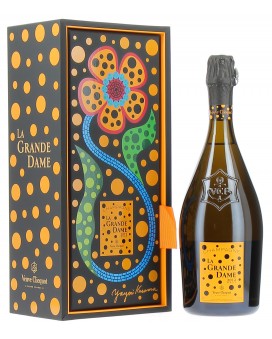
Champagne Veuve Clicquot La Grande Dame Blanc 2012 by Yayoi Kusama 75cl
Tribute to Madame Clicquot, Cuvée de Prestige La Grande Dame from Maison VEUVE CLICQUOT is celebrated by Yayoi Kusama. This...229,00 €In stock- Limited Edition
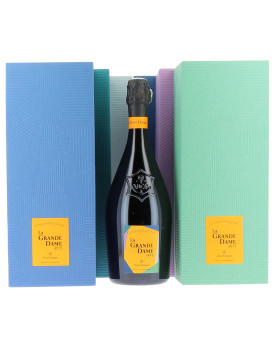
Champagne Veuve Clicquot La Grande Dame Blanc 2015 by Paola Paronetto 75cl
A tribute to Madame Clicquot, the Grande Dame 2015, Cuvée de Prestige by Maison VEUVE CLICQUOT is here highlighted by artist...231,00 €In stock Only 5 left! 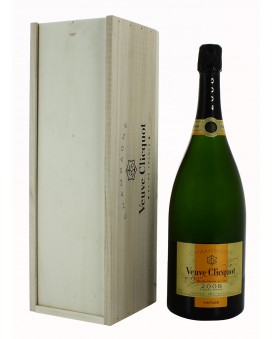
Champagne Veuve Clicquot Vintage Réserve 2008 Magnum 150cl
This VINTAGE RESERVE 2008 from VEUVE CLICQUOT is exclusively sourced from Grands Crus and Premiers Cru wines.249,00 €Sold out soon Only 1 left!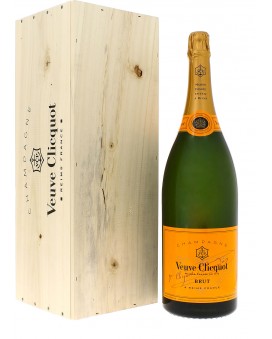
Champagne Veuve Clicquot Carte Jaune Jéroboam 300cl
Champagne Carte Jaune from VEUVE CLICQUOT is their most famous cuvée, worldwide acclaimed.358,00 €In stock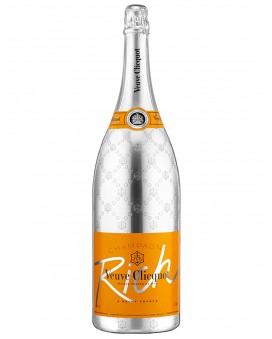
Champagne Veuve Clicquot Rich Jéroboam 300cl
Discover the all new cuvée from VEUVE CLICQUOT : the Rich.495,00 €Sold out soon Only 1 left!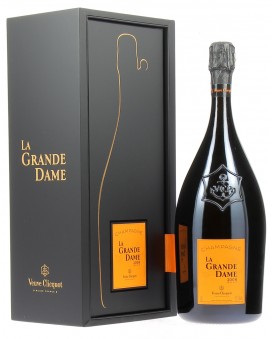
Champagne Veuve Clicquot La Grande Dame Blanc 2008 magnum 150cl
Cuvée Grande Dame from Veuve Clicquot is elaborated from an exclusive blend of 8 historical Grands Crus of the house, and...652,00 €Sold out soon Only 3 left!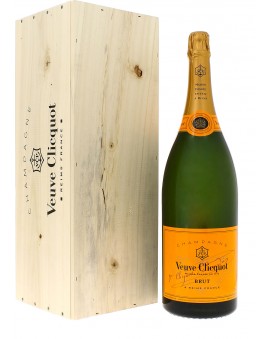
Champagne Veuve Clicquot Carte Jaune Mathusalem 600cl
Champagne Carte Jaune from VEUVE CLICQUOT is their most famous cuvée, worldwide acclaimed.798,00 €In stock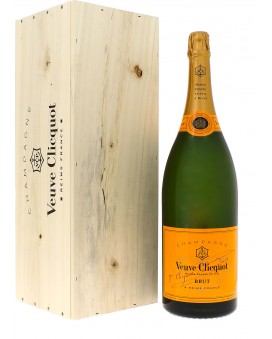
Champagne Veuve Clicquot Carte Jaune Salmanazar 900cl
Champagne Carte Jaune from VEUVE CLICQUOT is their most famous cuvée, worldwide acclaimed.1 196,00 €In stock Only 1 left!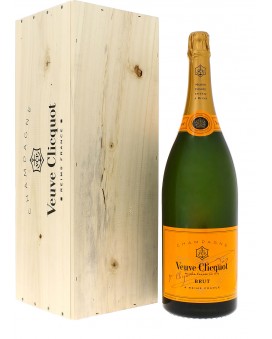
Champagne Veuve Clicquot Carte Jaune Balthazar 1200cl
Champagne Carte Jaune from VEUVE CLICQUOT is their most famous cuvée, worldwide acclaimed.1 890,00 €On demand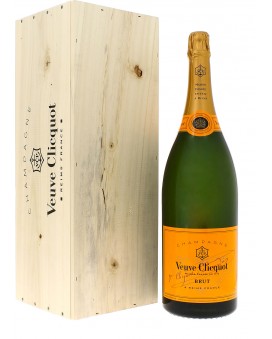
Champagne Veuve Clicquot Carte Jaune Nabuchodonosor 1500cl
Champagne Carte Jaune from VEUVE CLICQUOT is their most famous cuvée, worldwide acclaimed.2 390,00 €On demand
Champagne VEUVE CLICQUOT PONSARDIN
The Clicquot widow gave the international stature to the champagne house that bears his name. It was found in 1772 and acquired in 1987 by the LVMH group. Ranked seventh in the Top 50 Champagnes in the “Revue du Vin de France” magazine, the champagne house Veuve Clicquot Ponsardin is the symbol of excellence, boldness and modernity throughout the world.
The Veuve Clicquot vineyard is one of the leading one in the Champagne region, according to the size of its land (286 hectares) and its quality. This champagne house is the one to watch for every the house who dreams to combine quality with a quantitative development. In example, the Carte Jaune champagne, which is Brut Non-vintage is undoubtedly the most consumed brand, (more than 8 million bottles of champagne sold per year) offers the best and most regular quality.
Fineness and freshness characterized the unique Cliquot style. The Veuve Clicquot Ponsardin’s style comes from the vast majority of Pinot noir and Chardonnay compared Pinot Meunier. The Cuvée de Prestige of the champagne house Veuve Clicquot is characterized by a great fineness.
From the noblest grape varieties, Chardonnay and Pinot Black, “La Grande Dame” results from the assembly of eight Grands Crus of the house.
The champagne house Veuve Clicquot offers for sale a champagne range of a rare homogeneity and a high quality: Champagne Brut and Brut Vintage Champagne, Champagne Demi-Sec, Champagne Rosé and Champagne Rosé Vintage, and finally champagne Blanc de Blancs vintage without forgetting the famous vintage “La Grande Dame”.
Some bottles are available in magnum or Jeroboam, but also in originals gift caskets.
Trusted Reviews
97% of satisfied customers Shipping 24H
Order before 11AM Gift Message
free + 1200 références
in stock Storage
Hydro-regulated Secure Payment
Credit Card, Amex, Paypal, Bank transfer 
Interdiction de vente de boissons alcooliques aux mineurs de moins de 18 ans.
La preuve de majorité de l’acheteur est exigée au moment de la vente en ligne
Code de la santé publique.Art L.3342-1 et L.3353-3