- Abelé 1757
- Agrapart
- Alfred Gratien
- Apollonis
- AR Lenoble
- Armand de Brignac
- Ayala
- Barons de Rothschild
- Beaumont des Crayères
- Benoît Lahaye
- Bergeronneau Marion
- Besserat De Bellefon
- Billecart - Salmon
- Blin
- Bollinger
- Bruno Paillard
- Canard Duchene
- Castelnau
- Cattier
- Charles Collin
- Charles Heidsieck
- Chartogne-Taillet
- Chassenay d'Arce
- De Saint Gall
- De Sousa
- De Venoge
- Delamotte
- Demoiselle
- Deutz
- Devaux
- Diamant Vranken
- Dom Perignon
- Drappier
- Duval - Leroy
- Egly-Ouriet
- Epc
- Fleury
- Gosset
- Heidsieck & Co Monopole
- Henri Giraud
- Henriot
- Jacquart
- Jacquesson
- Jean-Noel Haton
- Joseph Perrier
- Konrat
- Krug
- Lafitte
- Laherte
- Lallier
- Lanson
- Larmandier-Bernier
- Laurent-Perrier
- Leclerc Briant
- Lombard
- Mailly Grand Cru
- Moet Et Chandon
- Montaudon
- Moussé Fils
- Mumm
- Napoleon
- Nicolas Feuillatte
- Pannier
- Paul Goerg
- Perrier Jouet
- Philipponnat
- Pierre Gimonnet
- Piper - Heidsieck
- Pol Roger
- Pommery
- Rare Champagne
- Louis Roederer
- Ruinart
- Salon
- Selosse
- Soutiran
- Taittinger
- Thienot
- Tsarine
- Veuve Clicquot
- Veuve Lanaud
Louis Roederer Champagne

Still a family business since 1776, the Louis Roederer House relies on a vineyard of 420 exceptional parcels on 244 hectares, 70% of which are classified as Grand Cru.
The vineyard is very diverse and a viticulture of revival is applied with soft and virtuous practices inspired by permaculture. A large part of the estate is already converted to organic farming(it is the largest AB certified area in Champagne).
Despite the worldwide success of its prestige cuvee, Cristal de Roederer, the company has remained in control of its supply, which is based almost exclusively on its own vineyards.
Already present on the tables of Tsar Nicolas II, Louis Roederer champagne is still synonymous with excellence and three million bottles are shipped worldwide each year. These are great champagnes, harmonious, focused on purity, straightness and a rich aromatic mosaic.
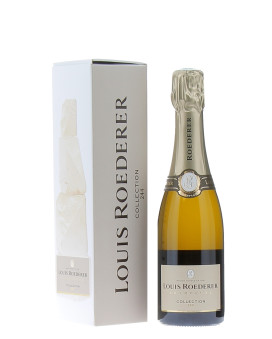
Champagne Louis Roederer Collection 244 half bottle 37,5cl
Collection 244 from LOUIS ROEDERER represents the best choice to discover one of the greatest and most famous Maison de champagne.28,00 €In stock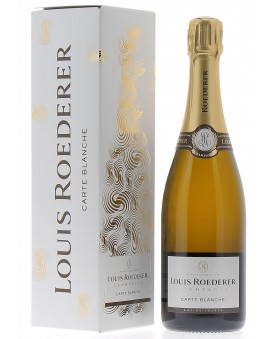
Champagne Louis Roederer Carte Blanche Demi-Sec 75cl
The result of 8 years of harvesting, Carte Blanche demi-sec from LOUIS ROEDERER House is a blend of approximately 40% Pinot...55,00 €Temporarily out of stock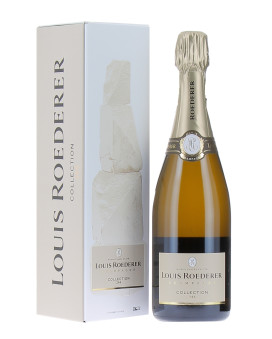
Champagne Louis Roederer Collection 244 75cl
Collection 244 from LOUIS ROEDERER represents the best choice to discover one of the greatest and most famous Maison de champagne.56,00 € from 6 59,00 € unitIn stock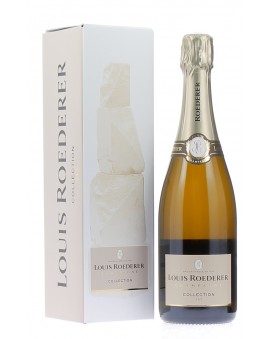
Champagne Louis Roederer Collection 243 75cl
Collection 243 from LOUIS ROEDERER represents the best choice to discover one of the greatest and most famous Maison de champagne.66,00 €Sold out soon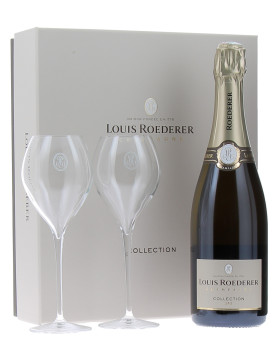
Champagne Louis Roederer Casket Collection 244 and two flûtes 75cl
Collection 244 from LOUIS ROEDERER represents the best choice to discover one of the greatest and most famous Maison de champagne.79,00 €In stock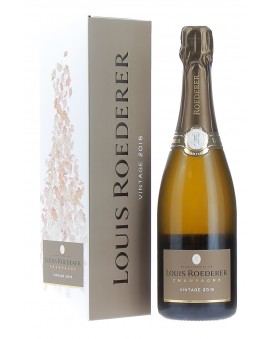
Champagne Louis Roederer Vintage 2015 75cl
The Vintage 2015 from Louis Roederer offers us a champagne with a greedy, generous and crisp texture.79,00 €In stock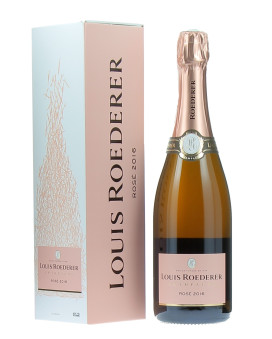
Champagne Louis Roederer Rosé Vintage 2016 75cl
Louis Roederer's 2016 Champagne Rosé is a champagne of great aromatic finesse, with a beautiful saline freshness.84,00 €In stock- Limited Edition
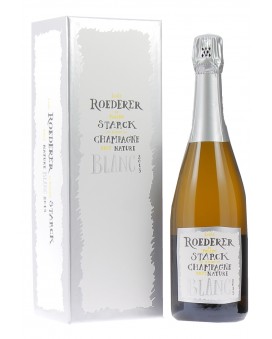
Champagne Louis Roederer Brut Nature 2015 by Starck 75cl
The story of Champagne Brut Nature 2015 from Louis Roederer started with an encounter : an historical terroir and a grandiose...85,00 €In stock - Limited Edition
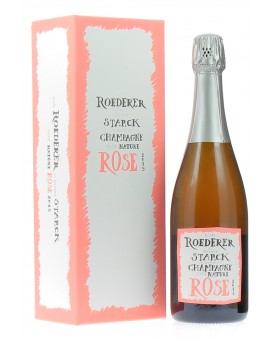
Champagne Louis Roederer Brut Nature Rosé 2015 by Starck 75cl
The Cuvée Brut Nature 2015 Rosé from Louis Roederer is the fruit of a meeting: that of an historic terroir with a great year,...90,00 €In stock - New !
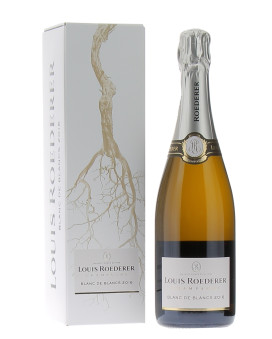
Champagne Louis Roederer Blanc de Blancs 2016 75cl
Maison Louis Roederer's Blanc de Blancs 2016 cuvée is a champagne of rare balance between strength and finesse.90,00 €In stock 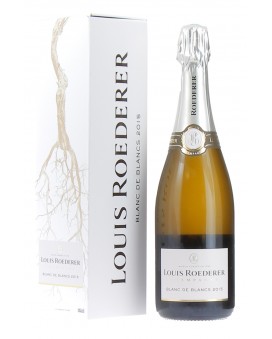
Champagne Louis Roederer Blanc de Blancs 2015 75cl
The 2015 vintage Blanc de Blancs cuvée, from the Maison Louis Roederer is a pure, fine, brilliant wine.96,00 €Sold out soon Only 5 left!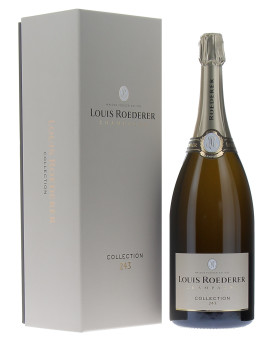
Champagne Louis Roederer Collection 243 magnum 150cl
Discover the all new Cuvée Brut from LOUIS ROEDERER: the cuvée Collection in magnum bottle size.114,00 €In stock- Limited Edition
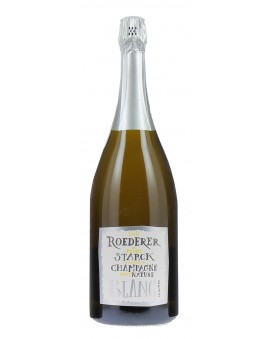
Champagne Louis Roederer Brut Nature 2015 by Starck magnum 150cl
The story of Champagne Brut Nature 2015 from Louis Roederer started with an encounter : an historical terroir and a grandiose...178,00 €In stock 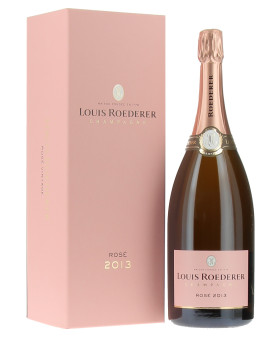
Champagne Louis Roederer Rosé Vintage 2013 magnum 150cl
The champagne Vintage Rosé 2013 in magnum from Louis Roederer offers the concentration, fruitiness, and compactness of the...187,00 €In stock Only 5 left!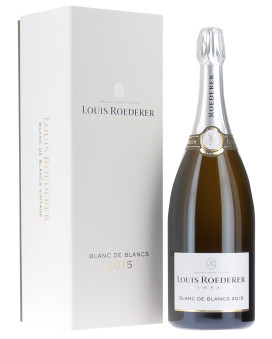
Champagne Louis Roederer Blanc de Blancs 2015 magnum 150cl
Cuvée Blanc de Blancs millésimée 2015, from Maison Louis Roederer is a pure, taut, fine, brilliant wine, offered here in magnum.209,00 €In stock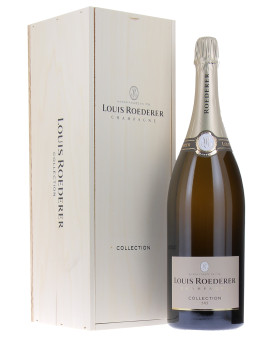
Champagne Louis Roederer Collection 242 Jéroboam 300cl
Discover the all new Cuvée Brut from LOUIS ROEDERER: the cuvée Collection 242 in jeroboam bottle size.324,00 €In stock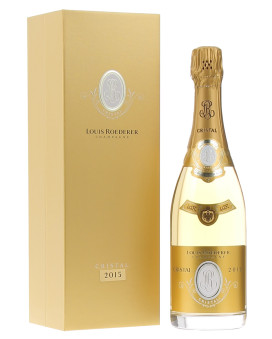
Champagne Louis Roederer Cristal 2015 luxury casket 75cl
Cuvée Cristal 2015, the flagship of Maison Louis Roederer, is a perfect balance of freshness and maturity.329,00 €Order limited to 12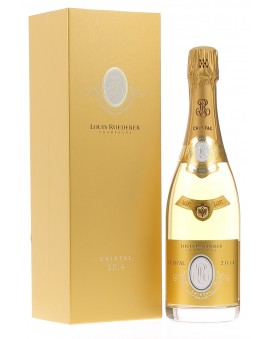
Champagne Louis Roederer Cristal 2014 luxury casket 75cl
Cuvée Cristal 2014 is the flagship of Maison Louis Roederer, it promises to be triumphant, with a superior finesse and racy...360,00 €Order limited to 3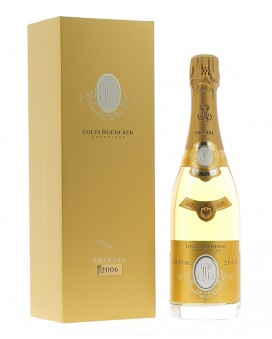
Champagne Louis Roederer Cristal 2006 luxury casket 75cl
The jewel in the crown of the Louis Roederer House, the Cuvée Cristal, was created in 1876. Made from 55% Pinot Noir and 45%...422,00 €Order limited to 1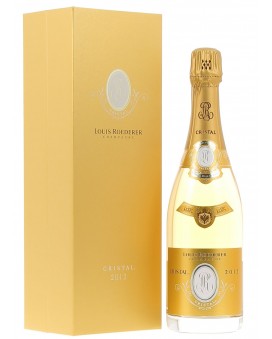
Champagne Louis Roederer Cristal 2012 luxury casket 75cl
The exceptional personality of vintage 2012 is clearly visible in this Cristal de Louis Roederer.468,00 €Order limited to 1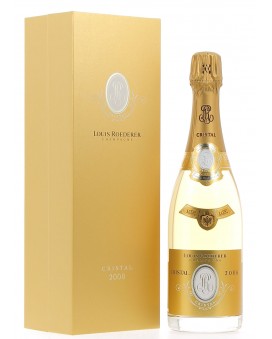
Champagne Louis Roederer Cristal 2008 75cl
Following 10 years of aging, champagne Cristal 2008 from Louis Roederer is now available ! Deep, intense, masterful.570,00 €Order limited to 1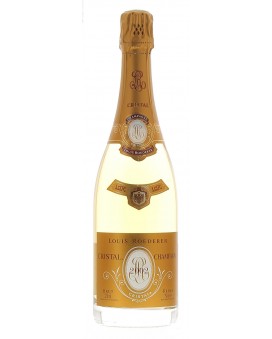
Champagne Louis Roederer Cristal 2002 75cl
All the exceptional characteristics of the 2002 vintage have literally been captured in this 2002 Cristal, which is generous...588,00 €Temporarily out of stock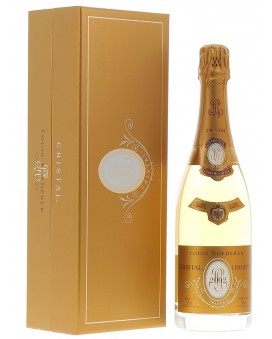
Champagne Louis Roederer Cristal 2002 luxury casket 75cl
All the exceptional characteristics of the 2002 vintage have literally been captured in this 2002 Cristal, which is generous...598,00 €Temporarily out of stock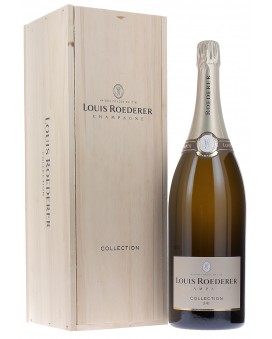
Champagne Louis Roederer Collection 241 Mathusalem 600cl
Discover the all new Cuvée Brut from ROEDERER: the cuvée Collection 241 in methuselah bottle size.618,00 €In stock Only 1 left!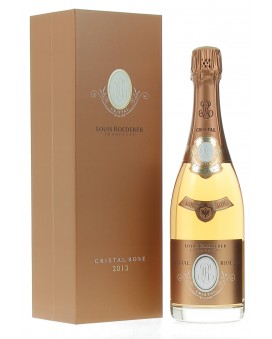
Champagne Louis Roederer Cristal Rosé 2013 75cl
Champagne Cristal Rosé 2013 from Louis Roederer is finally available ! Following 8 years of cellar aging Cristal Rosé 2013 is...828,00 €Order limited to 2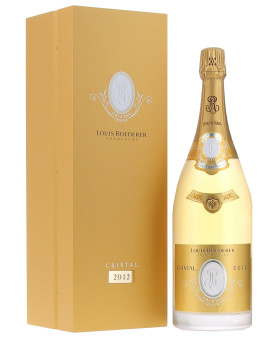
Champagne Louis Roederer Cristal 2012 magnum 150cl
The exceptional character of the 2012 vintage is reflected in this magnum of Louis Roederer Cristal.1 160,00 €Order limited to 1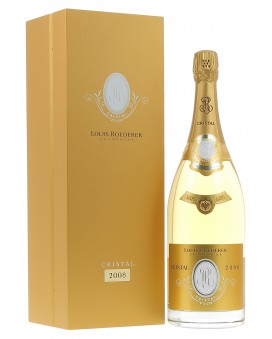
Champagne Louis Roederer Cristal 2008 Magnum 150cl
Following 10 years of aging, champagne Cristal 2008 in magnum from Louis Roederer is now available !Deep, intense, masterful.1 325,00 €Order limited to 1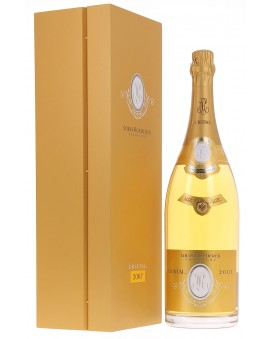
Champagne Louis Roederer Cristal 2007 Jéroboam 300cl
This is the flagship of the House Louis Roederer.3 380,00 €Temporarily out of stock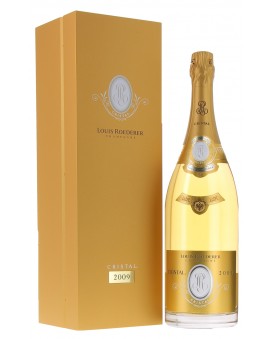
Champagne Louis Roederer Cristal 2009 Jéroboam 300cl
Silky, delicate and aerial, this is Cristal 2009 from Louis Roederer in jeroboam ! The 2009 vintage clearly sets among the best...3 450,00 €Order limited to 1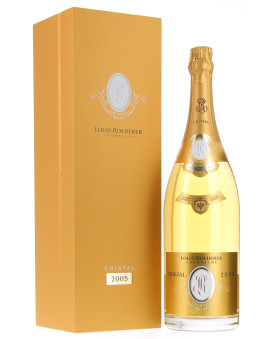
Champagne Louis Roederer Cristal 2005 Jéroboam 300cl
The Cristal 2005 champagne from Roederer is the flagship of this great House. Offered here in jeroboam, the 2005 vintage is...3 690,00 €Order limited to 1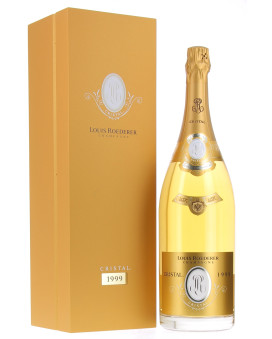
Champagne Louis Roederer Cristal 1999 Jéroboam 300cl
The 1999 Cristal Cuvée is a mythical cuvée created in 1876 for Tsar Alexander II and sold here in jeroboam.4 050,00 €Order limited to 1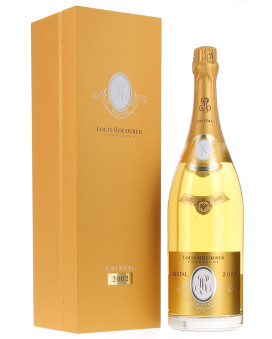
Champagne Louis Roederer Cristal 2002 Jéroboam 300cl
The exceptional character of this 2002 vintage is reflected in the Louis Roederer Cristal 2002, sold here in jeroboam.4 840,00 €Order limited to 1
Champagne LOUIS ROEDERER
The house belongs to the same family since its foundation in Reims in 1776, and to date, it remains one of the great Champagne houses still independent. In 1876, Louis Roederer’s son, who succeeded his father, created the Cristal Cuvée for the Tsar Alexander II.
It uses a Flemish glass master that designs an exceptional crystal bottle, so strong that it allows the bottom’s bottle to be flat. Thus was born the cuvée Cristal, the first cuvée de prestige of champagne. In 1909, the champagne house became the Official Supplier to the Imperial Court of Russia by Nicolas II.
From its size, its diversity and quality, the vineyards of Louis Roederer is certainly the main asset that founds house’s policy, ensuring its independence and the control of its champagne’s style. Its 244 acres are exclusively located in the Grands Crus and Premiers Crus of the three Champagne region. Reflecting the house’s spirit of perfection, the Louis Roederer’s style is based on precision, patience and attention to details. Louis Roederer has its own policy regarding the aging length of its champagne, well above the rules and requirements of the Champagne region habits: 3 ½ years for Brut Premier, 5 years for the vintages, and 6 years for Cristal.
This spirit of perfection is common to the different cuvées (Brut champagne, Brut Vintage, Blanc de Blancs vintage champagne, vintage rosé champagne and of course the Cristal and Cristal Rosé). Various shades characterizing its champagnes confer them a true tasting pleasure: very fine bubbles, the taste of the wine that combines the fruitiness and freshness, their flexible structure, highlighted by a delicate vinosity flavor to end up with a feeling of fullness.
Trusted Reviews
97% of satisfied customers Shipping 24H
Order before 11AM Gift Message
free + 1200 références
in stock Storage
Hydro-regulated Secure Payment
Credit Card, Amex, Paypal, Bank transfer 
Interdiction de vente de boissons alcooliques aux mineurs de moins de 18 ans.
La preuve de majorité de l’acheteur est exigée au moment de la vente en ligne
Code de la santé publique.Art L.3342-1 et L.3353-3