- Abelé 1757
- Agrapart
- Alfred Gratien
- Apollonis
- AR Lenoble
- Armand de Brignac
- Ayala
- Barons de Rothschild
- Beaumont des Crayères
- Benoît Lahaye
- Bergeronneau Marion
- Besserat De Bellefon
- Billecart - Salmon
- Blin
- Bollinger
- Bruno Paillard
- Canard Duchene
- Castelnau
- Cattier
- Charles Collin
- Charles Heidsieck
- Chartogne-Taillet
- Chassenay d'Arce
- De Saint Gall
- De Sousa
- De Venoge
- Delamotte
- Demoiselle
- Deutz
- Devaux
- Diamant Vranken
- Dom Perignon
- Drappier
- Duval - Leroy
- Egly-Ouriet
- Epc
- Fleury
- Gosset
- Heidsieck & Co Monopole
- Henri Giraud
- Henriot
- Jacquart
- Jacquesson
- Jean-Noel Haton
- Joseph Perrier
- Konrat
- Krug
- Lafitte
- Laherte
- Lallier
- Lanson
- Larmandier-Bernier
- Laurent-Perrier
- Leclerc Briant
- Lombard
- Mailly Grand Cru
- Moet Et Chandon
- Montaudon
- Moussé Fils
- Mumm
- Napoleon
- Nicolas Feuillatte
- Pannier
- Paul Goerg
- Perrier Jouet
- Philipponnat
- Pierre Gimonnet
- Piper - Heidsieck
- Pol Roger
- Pommery
- Rare Champagne
- Louis Roederer
- Ruinart
- Salon
- Selosse
- Soutiran
- Taittinger
- Thienot
- Tsarine
- Veuve Clicquot
- Veuve Lanaud
De Sousa Champagne

De Sousa Champagne House is a family business for 3 generations. The vineyard is located on 11 hectares in the heart of the famous Côte des Blancs, terroirs classified as Grand Cru.
The elaboration of the champagnes is traditional, the harvest is done by hand on vines of which three quarters are more than 45 years old, which offers to the champagnes of the House De Sousa an extraordinary aromatic richness...
The work of the vineyard has always been done in the respect of the nature and the environment, and quite naturally, the House has passed in Biodynamy in 1999, and has been certified Organic in 2010.

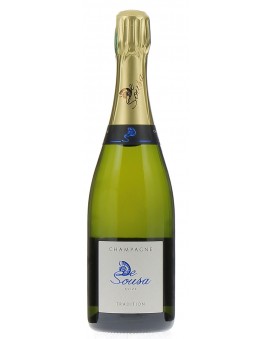
Champagne De Sousa Brut Tradition 75cl
The Champagne Brut Tradition of the DE SOUSA house is a well-balanced champagne, entirely vinified in vats in order to preserve...39,00 €Order limited to 6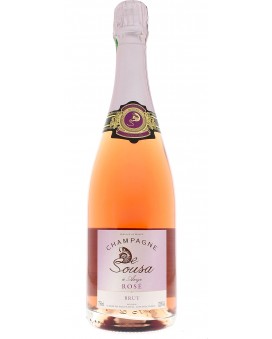
Champagne De Sousa Brut Rosé 75cl
The Brut Rosé champagne from DE SOUSA is elaborated from a blend of red and white wine.49,00 €Order limited to 6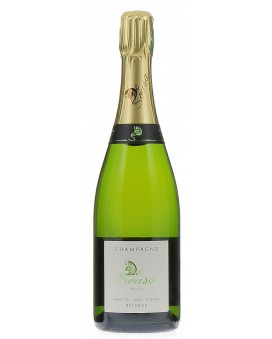
Champagne De Sousa Extra-Brut Réserve Grand Cru Blanc de Blancs 75cl
DE SOUSA's Reserve Champagne is a non-vintage Grand Cru Blanc de Blancs that will delight you with its freshness, finesse and...52,00 €Order limited to 6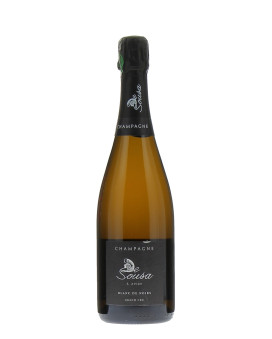
Champagne De Sousa Blanc de Noirs 75cl
DE SOUSA's Blanc de Noirs champagne is an organic 100% Pinot Noir Grand Cru from the Montagne de Reims.56,00 €In stock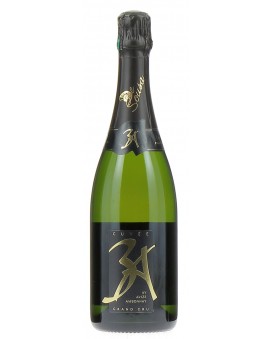
Champagne De Sousa Cuvée 3a ( avize, ay, ambonnay ) 75cl
3A standing for the 3 Grands Crus from which is elaborated this exceptional cuvée, 50% Chardonay from Avize, 25% of Pinot Noir...64,00 €Order limited to 6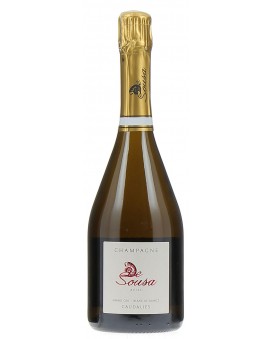
Champagne De Sousa Cuvée Caudalies 75cl
The Caudalies Cuvée from the DE SOUSA house is a blanc de blancs Grand Cru champagne.74,00 €Order limited to 3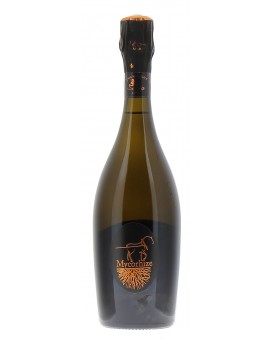
Champagne De Sousa Cuvée Mycorhize 75cl
Don’t wait and discover Cuvée Mycorhize from Maison De Sousa, an exceptional champagne.79,00 €Order limited to 2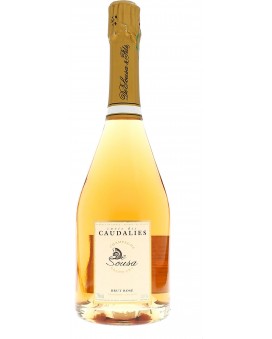
Champagne De Sousa Cuvée Caudalies Rosé 75cl
Discover the Caudalies Rosé from the DE SOUSA house, composed of 90% Chardonnay Grand Cru, from old vines and vinified in oak...98,00 €Order limited to 2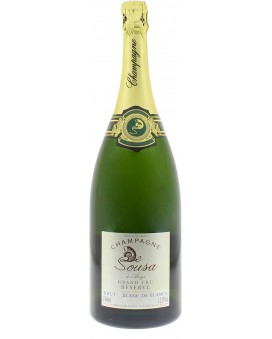
Champagne De Sousa Réserve Grand Cru Blanc de Blancs Magnum 150cl
DE SOUSA's Reserve Champagne is a non-vintage Grand Cru Blanc de Blancs that will delight you with its freshness, finesse and...118,00 €Order limited to 1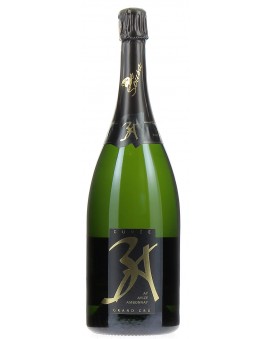
Champagne De Sousa Cuvée 3A ( Avize, Aÿ, Ambonnay ) Magnum 150cl
3A standing for the 3 Grands Crus from which is elaborated this exceptional cuvée, 50% Chardonay from Avize, 25% of Pinot Noir...143,00 €Order limited to 1 Only 3 left!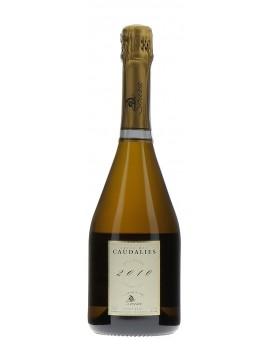
Champagne De Sousa Cuvée Caudalies Grand Cru 2010 75cl
It required more than 84 months of cellar aging to discover Cuvée Caudalies 2010 from Maison De Sousa.169,00 €Order limited to 3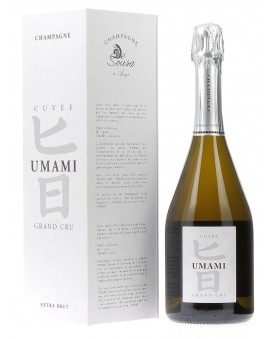
Champagne De Sousa Cuvée Umami Extra-Brut 2012 75cl
Cuvée UMAMI is issued from several particular climates carefully selected in the Great Growthsoil (terroir) of the House DE SOUSA.179,00 €In stock Only 5 left!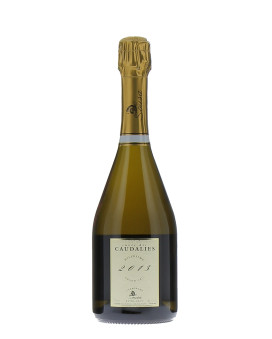
Champagne De Sousa Cuvée Caudalies Grand Cru 2013 75cl
Cuvée Caudalies Grand Cru 2013 is Maison De Sousa's Cuvée de Prestige, a high-flying 100% Chardonnay!179,00 €In stock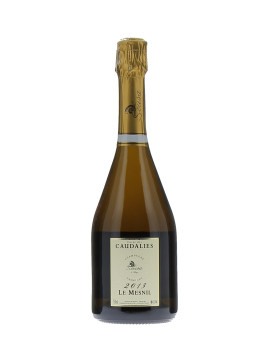
Champagne De Sousa Cuvée Caudalies Grand Cru Le Mesnil 2013 75cl
Maison De Sousa's Cuvée Caudalies Grand Cru Le Mesnil 2013 is a 100% Chardonnay Grand Cru from the fabulous terroir of Mesnil...188,00 €In stock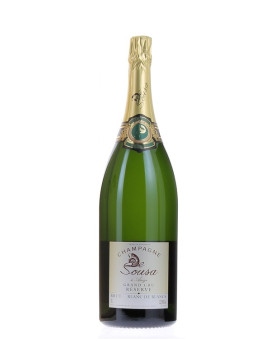
Champagne De Sousa Brut Tradition Jéroboam 300cl
The Champagne Brut Tradition of the DE SOUSA house is a well-balanced champagne, entirely vinified in vats in order to preserve...207,00 €Order limited to 2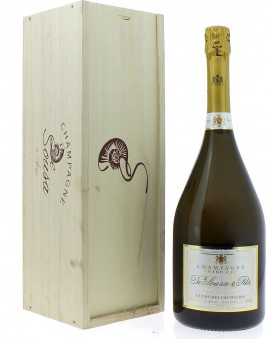
Champagne De Sousa Cuvee caudalies magnum 150cl
The Cuvée des Caudalies is yet another testament to the consistent quality of his production.247,00 €Order limited to 1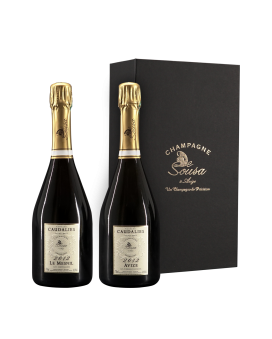
Champagne De Sousa Box of 2 Cuvée Caudalies Grand Cru 2012 75cl
Discover here two Caudalie cuvées, from the superb 2012 harvest, and from two unique terroirs in the heart of the Côte des...390,00 €In stock Only 1 left!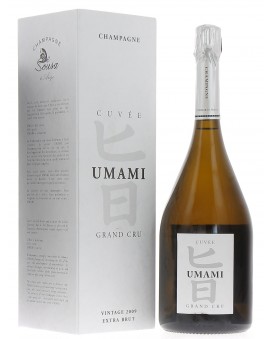
Champagne De Sousa Cuvée Umami Extra-Brut 2009 Magnum 150cl
Cuvée UMAMI Extra-Brut 2009 in magnum is issued from several particular climates carefully selected in the Great Growthsoil...425,00 €Sold out soon Only 2 left!
DE SOUSA Champagne
A philosophy
Côte des Blancs has both an ideal orientation South / Southeast, maximum sunshine, but also and especially a chalky soil, providing fine champagnes, elegance and minerality characteristics. Engaged since many years in a Bio growing process, the De Sousa house was certified in 2010 ensuring consumers of the quality of the product. It prohibits the use of pesticides, chemical fertilizers, weed killers, and uses instead natural active ingredients (plants and minerals) to protect the vines. This is to encourage them to deeply draw oligo elements which are specific to each terroir and to confer to each range of Cuvée its own character.
The expression of the terroir
Love Erick of De Sousa for the land is visceral. Because he owes everything from it and knows more than anyone that without it the champagne would not be what it is ... Summer and winter, under snow, frost, rain or shine, he brings to each parcel of his land, a unique care and rigor. For even less soil compaction, some of the vines are plowed with the horse. In the autumn season, some compost is made each year to strengthen micoryses. If the wine elaboration is a crucial step, the respect for the vines and the earth is the first priority for this family of wine growers whose sole purpose is to achieve to sublime champagne. These are the unique values from generation to generation, who have left their mark on the Champagne De Sousa.
Love the Earth
One feature of the De Sousa house is to have retained many old vines over 50 years, with some plots planted by the grandfather of Erick de Sousa, which are nearly 70 years old. The advantage of old vines is to have much deeper roots (35 to 40 meters into the chalk) and thus get the minerality. It also allows a natural soil management and gives more maturity and concentration to the grapes. From these old vines, Erick De Sousa made a Special Cuvée, The Cuvée des Caudalies (Caudalie is the unit of measurement of the length in the mouth for a wine (1 Caudalie equals 1 second).
A particular vineyard
The “Cuvées de Prestige”, such as the Caudalies cuvée or the “Desirable cuvée” , from old vines over 50 years, are vinified in oak barrels of 225L capacity. This requires a considerable amount of vinification work: particularly for non-vintage cuvée Caudalies, Grand Cru Blanc de Blancs: wine of the year is assembled with reserve wines from all our crops since 1995 (so for 12 mixed years). The wine is stirred regularly during aging in wood to give the fat and depth. The wine is not filtered and receives only a low intake of so2, indigenous yeasts are used for the first fermentation. The champagne will then improve on slats in our chalk cellars for 60 months to give him more “material” before it will be again "poignetté". The bottles will be manually shaken for the deposit in suspension to take place again in the bottle and to give more density to the wine. Others cuvées from the range have a different vinification process according to the origin of the grapes, the grape variety, the characteristics of the soil... The Art of Winemaking. All the care given to the viticulture, the wine making, the development of various vintages, prolonged aging etc… gave to the De Sousa house the honor to be selected by Andreas Larsson, Best Sommelier of the World 2007 and to receive the ALS label.
The family grows
In February 2004, Erick De Sousa created the Zoémie De Sousa champagne. He had the opportunity to acquire 2,500 m2 of cellars in the center of Avize, so then Erick De Sousa could, through "Zoémie", his trading company, buy and vinify using the same methods. An opportunity that fans and customers will truly appreciate. Founder of Champagne De Sousa, the mother of Erick, Zoémie De Sousa has every reason to be proud of the "success story" of the dynasty.
Trusted Reviews
97% of satisfied customers Shipping 24H
Order before 11AM Gift Message
free + 1200 références
in stock Storage
Hydro-regulated Secure Payment
Credit Card, Amex, Paypal, Bank transfer 
Interdiction de vente de boissons alcooliques aux mineurs de moins de 18 ans.
La preuve de majorité de l’acheteur est exigée au moment de la vente en ligne
Code de la santé publique.Art L.3342-1 et L.3353-3