Côte des Blancs: The world of Blanc de Blancs

Publié par Stefanie Köhler - 30/08/2022 - Champagne World

It's almost impossible to talk about Champagne without mentioning the Côte des Blancs or its synonym Blanc de Blancs. Champagne's famous Côte des Blancs is one of the Champagne region's four major wine-growing sub-regions, along with the Marne Valley, Montagne de Reims and Côte des Bar.

The gentle slopes of the Côte des Blancs vineyards stretch for some twenty kilometers, from south of Épernay to Vertus and Bergères-les-Vertus. Ten wine-producing villages make up this sub-region and, despite their small size, many of them have achieved worldwide renown thanks to iconic champagne producers such as Champagne Selosse and Champagne Agrapart in Avize, or Champagne Salon in Mesnil-sur-Oger.

What stands out most about Côte des Blancs is the white limestone soil of the vineyards, which is thought to be the origin of the name, although other theories suggest different origins. Here, the soils are so poor in topsoil that the bright white bedrock of Cretaceous-age chalk outcrops in many plots. These eroded slopes create the perfect growing conditions for one grape variety: Chardonnay.

A landscape of Grands Crus and Premiers Crus

3,142 hectares of Chardonnay are planted in the Côte des Blancs delimited area, spread over 10 wine-growing villages. These include six Grand Crus - Avize, Cramant, Le Mesnil-sur-Oger, Oger, Chouilly and Oiry - and four Premier Crus: Cuis, Grauves, Vertus and Bergères-les-Vertus.

Chardonnay covers 97.22% of the Côte des Blancs vineyard surface, and only 1.99% Pinot Noir and 0.75% Meunier adorn the plots of some growers. (Source: Union de Maisons de Champagne)

Although the Côte des Blancs has been known for its top-quality Chardonnay throughout Champagne's history, the proportion of Pinot Noir was more prevalent in the last century, particularly in the southern part of the slope such as Vertus and Bergères-les-Vertus. However, when the appeal of refreshing Blanc de Blancs Champagne became a real trend, and white grape prices began to soar as a result, more and more winemakers began to replace their vineyards with Chardonnay.

The highest peak on the Avize slopes reaches an altitude of 248 meters, though most reach altitudes of between 100 and 200 meters. Forest covers most hilltops with a generous layer of clay soil, while the lower slopes often have so little soil that white patches of bare limestone can be found. The balance sought between these two extremes is generally found in the mid-slope sections, where the grapes express themselves to the full.
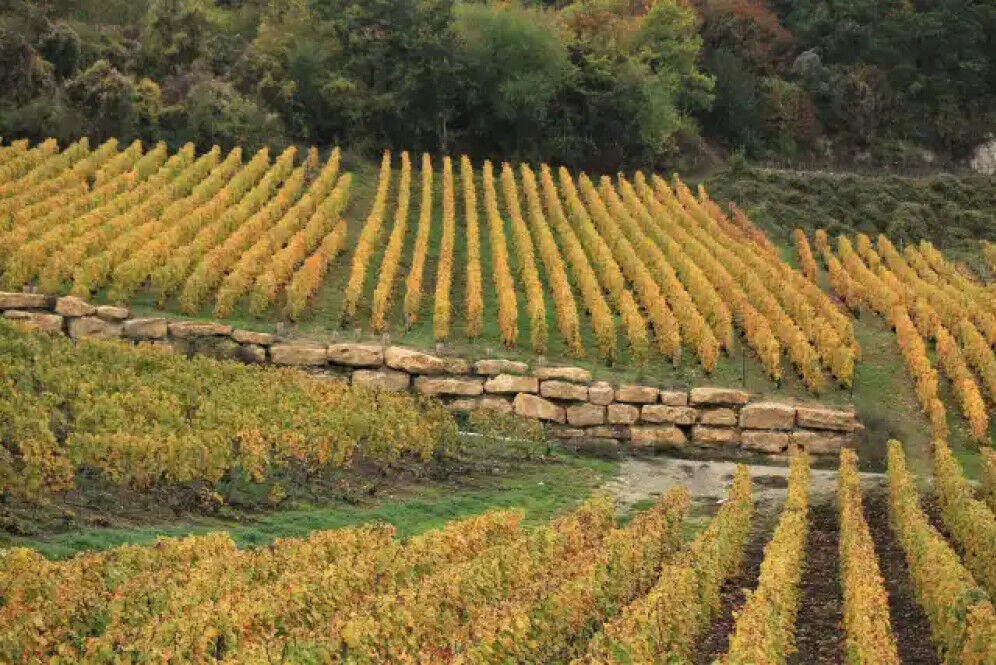
JR0B0336-1

The Côte des Blancs style

The overall character of Côte de Blancs champagne is described as lively, with crisp acidity and racy minerality. As the great champagne houses have made the Blanc de Blancs name popular around the world, this definition has become so emblematic for the entire Blanc de Blancs category that many consumers expect all Chardonnay-based champagnes to have the same style, regardless of where the grapes come from.

However, more knowledgeable champagne lovers will always argue that the Côte des Blancs has much more to offer than a crisp champagne with bright acidity and racy minerality, and that each village deserves its own recognition. And they're absolutely right. There is a wide range of distinct expressions in the base wines, varying from village to village and hillside to hillside!

When asked about the uniqueness of their wines, Côte de Blancs winemakers quickly lose themselves in philosophical and much-appreciated discussions about the distinctions of their terroirs. One of their most philosophical representatives is Anselme Selosse, of Domaine Jacques Selosse in Avize, who was one of the first pioneers to promote terroir distinction in Champagne, when most producers were still convinced that blending wines was their only selling point.

Today, the cellar masters of the most famous Champagne houses specifically select crus or even parcels for distinct qualities to create their precise blends, such as aromatic expression, acidity levels or body.
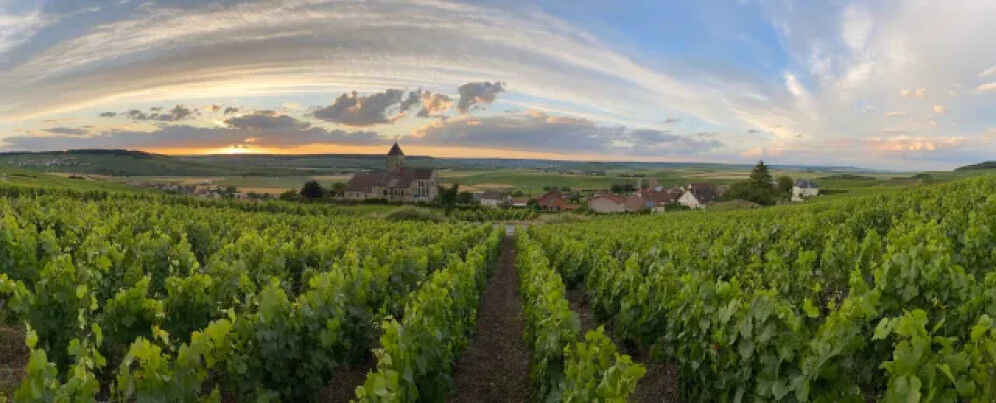
Eglise-de-Cuis-entoure?-de-nos-vignobles-2020-1

The soul of Côte de Blancs Crus

The terroir ofAvize , for example, produces medium-bodied wines, with straightforward, almost strict tension, root and graphite minerality, often with a salty finish. In the neighboring village of Cramant, the vines grow on limestone soils with a little more clay, resulting in vibrant wines, a little fuller in body and structure, but with fairly lively acidity and a broader aromatic dimension.

A few kilometers away, Le Mesnil-sur-Oger - the village Eugène-Aimé Salon chose for the distinct expression of its terroir when he founded Champagne Salon - is known for its delicate wines of great finesse, chalky tension and depth, which tend to be austere in their youth and need time to age into great wines of refinement and powerful elegance. And once again, the borders with the next village, Oger, completely change the character of the wines. Oger presents the most exotic Chardonnay in the Côte des Blancs: full-bodied and well-balanced, with a bold backbone, firm acidity and a broad aromatic expression of ripe oranges.

Of course, this diversity of terroir continues as you move from village to village, not just within the confines of the Côte des Blancs, but throughout the Champagne region. The most delicious and exciting way to explore these differences is to taste the range of extraordinary champagnes that the Côte des Blancs has to offer.

If you're currently dreaming of your future trip to Champagne, or if you're already planning your trip, we highly recommend adding a visit to the Côte des Blancs to your list. Along the Route Touristique du Champagne (a scenic route through the most prestigious villages), you can discover the listed crus and see for yourself the variations in soil and topography. If drinking champagne is always the greatest pleasure, visiting and understanding the importance of these small villages in the overall landscape is a key to enjoying your next glass of champagne even more.

Champagne d'assemblage de la Côte des Blancs exclusively from the Côte des Blancs:
  • Champagne Billecart-Salmon Blanc de Blancs Grand Cru: blended from 4 Côte des Blancs grands crus: Avize, Chouilly, Cramant, Le Mesnil-sur-Oger.
  • Champagne Pol Roger Blanc de Blancs 2013: represents the six Grand Cru villages of Oiry, Chouilly, Cramant, Avize, Oger and Le Mesnil-sur-Oger.
  • Champagne Louis Roederer Blanc de Blancs 2014: made entirely from a selection of plots in Avize.
  • Champagne Taittinger Comtes de Champagne Blanc de Blancs 2011: a blend of five Grand Cru villages: Avize, Chouilly, Cramant, Le Mesnil-sur-Oger and Oger.

A single-village Champagne Blanc de Blancs to discover the different tastes of the terroirs of these villages:
  • Avize Grand Cru
    Champagne Selosse and Champagne Agrapart are the stars of the village, and both honor Avize with a single-village cuvée: Champagne Agrapart Avizoise 2015 Extra-Brut Blanc de Blancs Grand Cru or Champagne Selosse Les Chantereines.
  • Oger Grand Cru: Champagne Pierre Gimonnet dedicates two cuvées to this special terroir: the non-vintage Oger Grand Cru and the vintage edition Spécial Club Oger Grand Cru 2015.
  • Chouilly Grand Cru: Champagne AR Lenoble offers two fantastic cuvées to help you understand the character of Chouilly: Grand Cru Blanc de Blancs 2012 and Cuvée Gentilhomme.
  • Cuis Premier Cru: With great pride in the magnificent Premier Cru terroir of its hometown, Champagne Gimonnet produces its Cuis 1er Cru Brut.
  • Cramant Grand Cru: Champagne Lombard Brut Nature Cramant Grand Cru "Les Bauves" lets you discover the sparkling nature of Cramant, and if you're curious how that translates into still wine, try Champagne Larmandier-Bernier Cramant Nature 2017 Coteaux Champenois to compare
  • Le-Mesnil-sur-Oger Grand Cru: Three of champagne's most legendary producers bring the excellence of this grand cru to the fore: Champagne Salon Cuvée S 2002, Champagne Krug Clos du Mesnil and Champagne Selosse Les Carelles.
  • Vertus Premier Cru: Champagne Larmandier-Bernier bottles one of the rare single-vineyard cuvées from Vertus: Terre de Vertus Non Dosé 1er Cru 2015
Partager
Trusted Reviews
97% of satisfied customers
Shipping 24H
Order before 11AM
Gift Message
free
+ 1200 références
in stock
Storage
Hydro-regulated
Secure Payment
Credit Card, Amex, Paypal, Bank transfer
Added to cart !
Limité à 3 bouteilles. Nous les avons ajoutées à votre panier.
Quantity
Continue shopping