


From Harvest to Base Wine
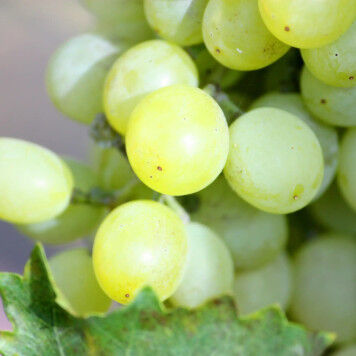
The production of a Blanc de Blancs begins in the vineyards with the manual harvest, which is mandatory in Champagne. The grapes from Chardonnay grapes are harvested in whole clusters and then quickly transported to the press to preserve their freshness and prevent premature oxidation. This step is crucial: the quality of the grapes upon arrival at the press directly determines the quality of the final cuvée.
Next comes the delicate pressing, a key step for high-quality Blanc de Blancs. Only the heart juice—known as the “cœur de cuvée” in Champagne jargon—is used for the finest bottles. The grape skins remain in contact with the juice for only a very short time, which guarantees a very pale, crystalline color and maximum vibrancy. The pomace obtained after pressing is distilled separately to produce the famous Fine Marne or marc de Champagne, traditional brandies of the region.
The extracted juice is then vinified like a classic still wine: this is known as the base wine, which is still without bubbles at this stage. This first fermentation can take place in stainless steel tanks to preserve freshness, or in oak barrels for cuvées where greater complexity is sought.
Blending and Reserve Wines
This is where the cellar master’s art comes into play, in what is undoubtedly the most creative stage of the entire winemaking process. For a non-vintage Blanc de Blancs, several plots of Chardonnay grapes with complementary profiles are blended—often sourced from multiple crus in the Côte des Blancs (Cramant for roundness, Avize for precision, Mesnil for tension, for example) to create a consistent and recognizable style.
To these wines from the current vintage are added precious reserve wines—that is, wines from previous years that are carefully preserved to ensure the consistency of a house’s style. Some houses use the so-called “solera” method for their reserve wines: a cascading system in which, each year, a portion of the wine is drawn off and then replaced by the new vintage.
The result is a "liquid memory" that can span several decades, adding complexity and depth to non-vintage cuvées.