
What determines the price of a Blanc de Blancs?
A demanding and sometimes rare grape variety
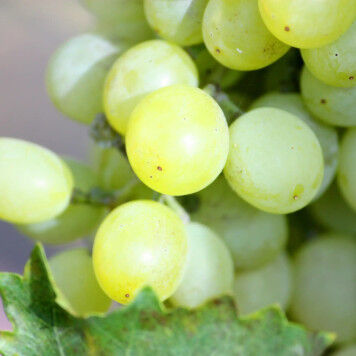
It’s important to know that a Blanc de Blancs is made exclusively from Chardonnay. However, this grape variety accounts for only about one-third of the Champagne vineyards, and the best plots are concentrated in the Côte des Blancs. The grapes from villages classified as Grand Cru command higher prices there, which automatically drives up the price per bottle.
Time: The Invisible Cost
It takes years for a champagne to reach the market. Aging on racks—that is, the time spent in the cellar before disgorgement—ties up inventory and improves quality. The longer the aging period, the more complexity the cuvée gains, and the higher its price rises.
Labor and expertise
From vineyard work to blending, riddling, and disgorgement, each step requires precise expertise. A terroir-driven champagne, vinified plot by plot, demands more care than a cuvée produced in very large volumes.
The price reflects more than just the quality of the wine: it also incorporates the brand’s reputation, the bottle’s packaging, and the marketing strategy. A big name comes at a price—sometimes as much for the label as for the contents.
Major Price Ranges
Entry-level: 25 to 40 euros
This is the realm of the first affordable Blanc de Blancs: non-vintage cuvées from cooperatives, generalist houses, or lesser-known winemakers. At this price point, you can already find lovely, elegant bottles with beautiful finesse, perfect for an aperitif or a special occasion.
Houses like Paul Goerg and De Saint Gall, both located in the heart of the Chardonnay vineyards, offer fresh, well-crafted Blanc de Blancs—perfect for discovering the style without breaking the bank. This is often the best way to experience a true chalk terroir at a reasonable price.
The mid-range: 40 to 70 euros
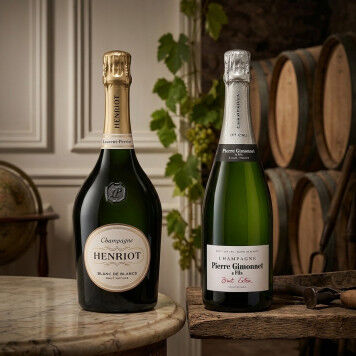
This is where a winemaker’s name really starts to make a difference. On the Côte des Blancs, Pierre Gimonnet in Cuis produces cuvées of remarkable precision that are particularly accessible, while De Sousa in Avize embodies a more plot-specific approach. As for the houses, Delamotte on the Côte des Blancs remains a historic benchmark for the style, at a price that’s still reasonable given its reputation.
For those who like to venture off the beaten path, this price range also opens the door to winemakers with distinct character. Agrapart and Larmandier-Bernier are among the leading figures in terroir-driven Blanc de Blancs: their cuvées sometimes require a slightly higher budget, but offer a fascinating interpretation of the Champagne chalk.
The high end and prestige: over 70 euros
Once you cross this threshold, you enter the realm of the great names. Ruinart has made Blanc de Blancs its hallmark, while Taittinger elevates Chardonnay to new heights in its prestige cuvée, Comtes de Champagne. These cuvées justify their price through extended aging and a rigorous selection of the finest crus.
At the very top of the pyramid, a few names stand out as absolute exceptions. Salon, with its unique vintage cuvée from Mesnil-sur-Oger, and Jacques Selosse in Avize embody the pinnacle of Blanc de Blancs. Rare and highly sought-after, their bottles cost well over 100 euros, and even more for the most coveted vintages.