How was the Abyss cuvée created?
A blend designed for the sea
The Abyss cuvée isn’t just a random selection from the range that was plunged into the ocean to create a buzz. It’s a blend specifically designed for underwater aging, the result of a process that’s both scientific and poetic.
Hervé Jestin selected three specific plots from the Leclerc Briant vineyard—one for Chardonnay, one for Pinot Noir , and one for Meunier. These plots share a common characteristic: they rest on exposed limestone, with no layer of clay or sand above. Pure limestone.
And what exactly is limestone? It is the sea from 40 million years ago. Billions of tiny fragments of marine fossils accumulated, crushed, and sedimented to a depth of tens of meters. This soil holds the ocean’s memory. Hervé Jestin’s idea was therefore to create a cuvée whose grapes already have their roots anchored in this marine memory, then to expose it to today’s sea to see if this modern sea could reawaken the memory of the one from long ago. It’s beautiful, isn’t it?
The underwater cellar of Ouessant
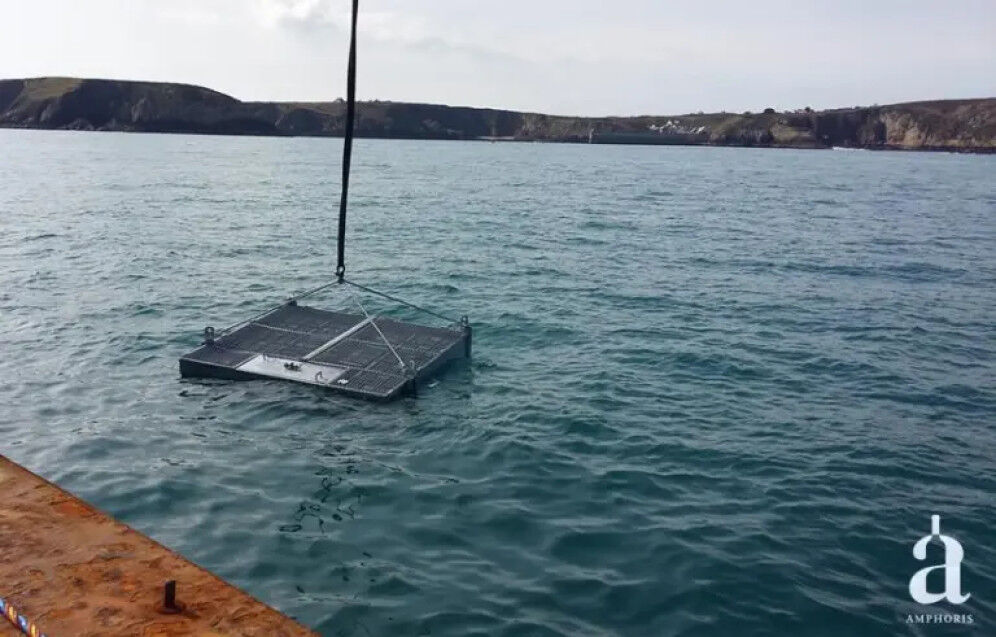
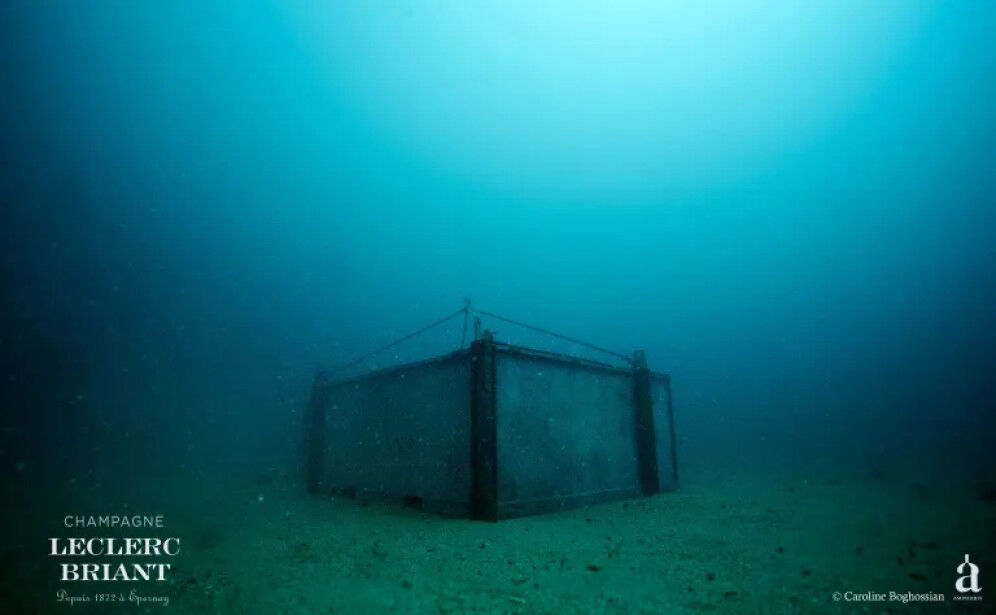
In 2013, Maison Leclerc Briant was contacted by two young Bretons from the company Amphoris, who had the idea of creating a two-hectare underwater cellar around the island of Ouessant, in Finistère, at a depth of 60 meters. The house was in the process of bottling the 2012 vintage. Why not?
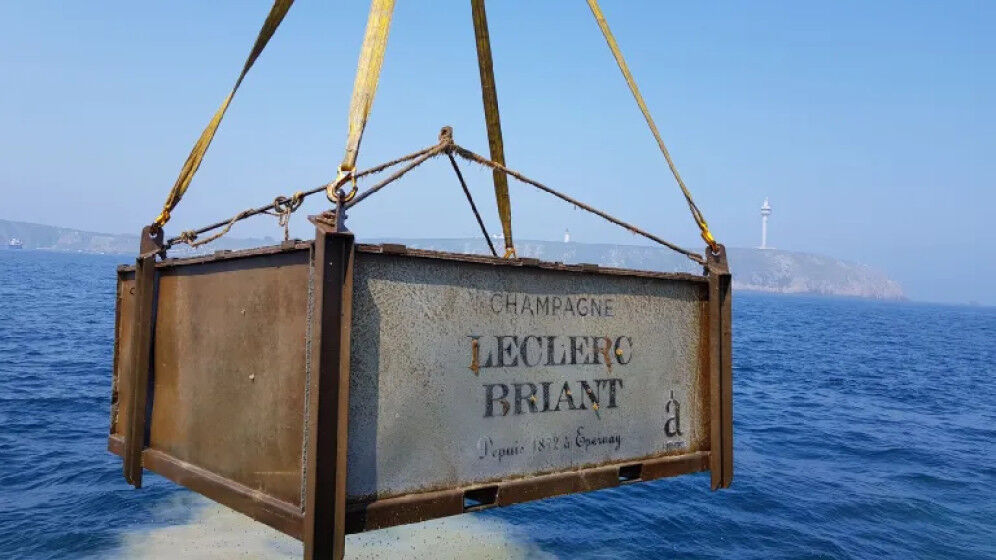
The bottles are placed in large racks that allow water and currents to flow through. It is not the bottle that moves: it is the water surrounding it that constantly swirls around it. At a depth of 60 meters, the pressure is 6 bars—exactly the same inside the bottle as outside. Nothing gets in, nothing gets out. The champagne is completely sealed.
The Baie du Stiff, at the eastern tip of the island of Ouessant, is one of the most turbulent maritime areas in the Atlantic. And it is precisely this intense marine energy that, according to Hervé Jestin, acts as a revitalizing force on the champagne. The wine soaks up a marine energy that traditional cellar aging conditions cannot replicate.
A year beneath the waves
After a standard two-year aging period on racks, approximately 3,500 bottles are submerged each year for an additional year underwater, completing a full marine cycle. In total, the Abyss cuvée spends three years maturing before being brought back to the surface, disgorged, and shipped.
The latest vintage is the Abyss Rosé 2019: a blend of 92% Chardonnay and 8% Pinot Noir. A cuvée that pushes the house’s aromatic exploration even further, adding the dimension of rosé champagne to the underwater experience.
The bottles: each bottle is a unique treasure
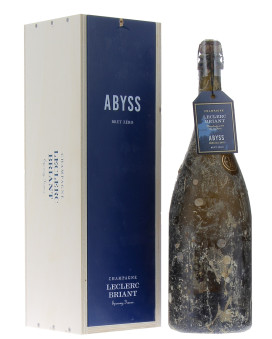
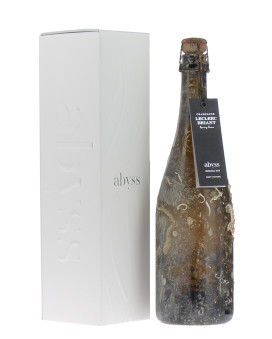
This is one of the details that makes the Abyss cuvée truly unique, in the literal sense of the word. When the bottles are brought up from the seabed, they bear the traces of their underwater adventure.
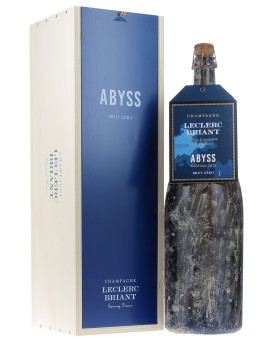
The wax that sealed the cork gradually fades away. The wire cage is corroded by seawater. The cork itself is blackened, marked, and weathered by twelve months spent 60 meters below the surface. Each bottle bears a different patina. No two are alike.
Initially, the house replaced the cork before shipping to present a “clean” bottle. But consumer feedback was unanimous: they wanted the original cork, the one that had descended into the abyss. Since then, the bottle has been sold exactly as it returns from the ocean floor—raw, marked by time and the sea. Like a pirate’s treasure brought up from the depths.
It is this authenticity that makes opening a bottle of Abyss feel like a small ceremony. Each bottle is a unique object, a collector’s item as much as an exceptional champagne.