- A.Bergere
- Abelé 1757
- Agrapart
- Alfred Gratien
- Apollonis
- Armand de Brignac
- Ayala
- Barons de Rothschild
- Beaumont des Crayères
- Benoît Lahaye
- Bergeronneau Marion
- Besserat De Bellefon
- Billecart - Salmon
- Blin
- Bollinger
- Bruno Paillard
- Canard Duchene
- Castelnau
- Cattier
- Charles Collin
- Charles Heidsieck
- Chartogne-Taillet
- Chassenay d'Arce
- De Saint Gall
- De Sousa
- De Venoge
- Delamotte
- Demoiselle
- Deutz
- Devaux
- Diamant Vranken
- Dom Perignon
- Drappier
- Duval - Leroy
- Egly-Ouriet
- Epc
- Fleury
- Gosset
- Heidsieck & Co Monopole
- Henri Giraud
- Henriot
- Jacquart
- Jacquesson
- Jean-Noel Haton
- Joseph Perrier
- Konrat
- Krug
- Lafitte
- Laherte
- Lallier
- Lanson
- Larmandier-Bernier
- Laurent-Perrier
- Leclerc Briant
- Lenoble
- Lombard
- Mailly Grand Cru
- Moet Et Chandon
- Montaudon
- Moussé Fils
- Mumm
- Napoleon
- Nicolas Feuillatte
- Pannier
- Paul Goerg
- Perrier Jouet
- Philipponnat
- Pierre Gimonnet
- Piper - Heidsieck
- Pol Roger
- Pommery
- Rare Champagne
- Louis Roederer
- Ruinart
- Salon
- Selosse
- Soutiran
- Taittinger
- Thienot
- Tsarine
- Veuve Clicquot
- Veuve Lanaud
BLANC DE BLANCS CHAMPAGNE
The Blanc de Blancs champagne is a champagne made exclusively from white grapes, primarily the Chardonnay variety. Recognizable by its crystal-clear color, its freshness on the palate, and its characteristic salty minerality, it appeals to both enthusiasts seeking elegance and connoisseurs looking for a wine with aging potential. Discover our selection of Blanc de Blancs champagnes below: major houses (Ruinart, Taittinger, Perrier-Jouët, Salon …), independent winemakers from the Côte des Blancs (Larmandier-Bernier, Agrapart …), vintage cuvées, available in 75cl bottles, magnums, or half-bottles…

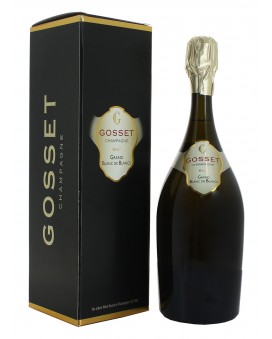
Champagne Gosset Grand Blanc de Blancs Magnum 150cl
Lively, fresh, and well-structured, this Grand Blanc de Blancs champagne is a hallmark of Gosset’s style and tradition....159,00 €In stock
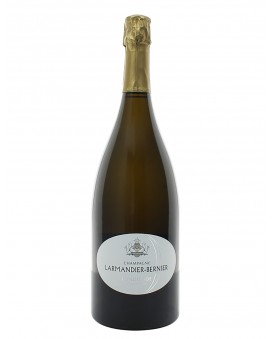
Champagne Larmandier-bernier Blanc de Blancs Extra-Brut 1er Cru Magnum 150cl
The Longitude champagne from LARMANDIER BERNIER, available in magnum bottles, is a Blanc de Blancs Extra-Brut 1er Cru,...160,00 €In stock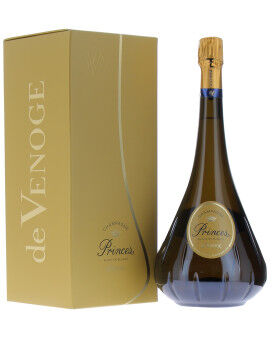
Champagne De Venoge Princes Blanc de Blancs magnum 150cl
Treat yourself to a magnum of Champagne Princes Blanc de Blancs from Maison De Venoge.165,00 €In stock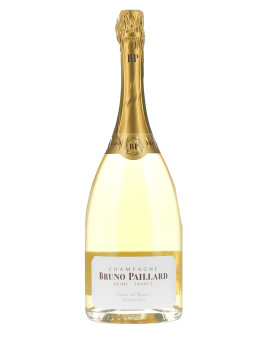
Champagne Bruno Paillard Blanc de Blancs Grand Cru magnum 150cl
The Champagne Blanc de Blancs Grand Cru in magnum of the Bruno Paillard House is a 100% Chardonnay Grands Crus Extra-Brut, once...169,00 €Order limited to 6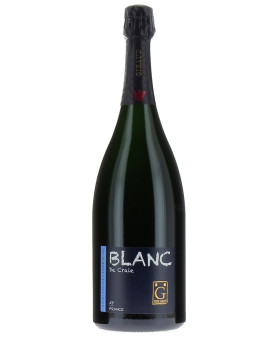
Champagne Henri Giraud Blanc de Craie magnum 150cl
Maison Henri Giraud's Cuvée Blanc de Craie in magnum is a great Blanc de Blancs champagne.172,00 €Order limited to 1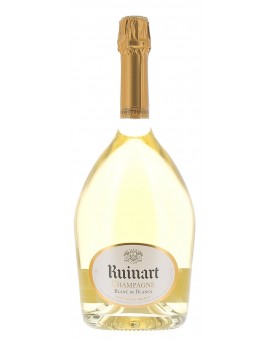
Champagne Ruinart Blanc de Blancs Magnum 150cl
Made from 100% carefully selected Chardonnays, the magnum of Ruinart Blanc de Blancs seduces with its subtle balance of...218,00 €In stock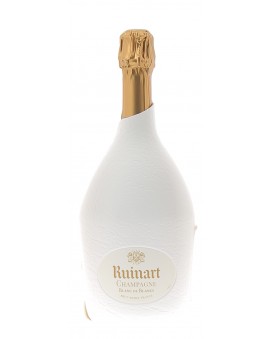
Champagne Ruinart Blanc de Blancs second skin case magnum 150cl
The pure expression of Chardonnay, Ruinart's signature grape variety, in a magnum, second-skin case, for a prestigious gift.224,00 €Order limited to 12 Only 3 left!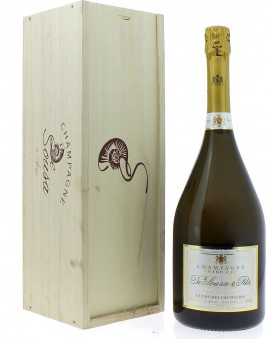
Champagne De Sousa Cuvee caudalies magnum 150cl
Cuvée Caudalies from the house of DE SOUSA is a blanc de blancs Grand Cru champagne .247,00 €Order limited to 1- Free Shipping
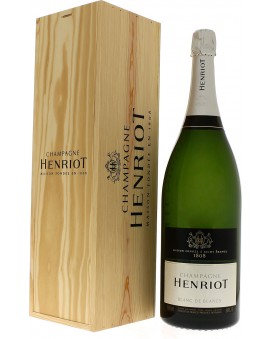
Champagne Henriot Blanc de Blancs Jéroboam 300cl
Champagne Blanc de Blancs Henriot perfectly embodies the expertise of this iconic house. Discover it here in its Jeroboam...328,00 €In stock Only 1 left! 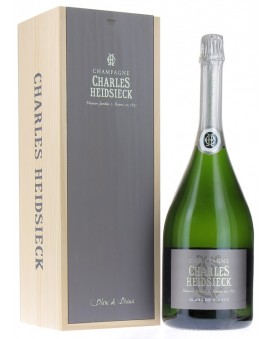
Champagne Charles Heidsieck Blanc de Blancs Jéroboam 300cl
Champagne Blanc de Blancs is the all new cuvée from Maison Charles Heidsieck : a tenseness and mineral cuvée, sold here in...453,00 €In stock Only 1 left!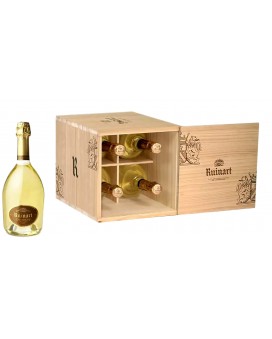
Champagne Ruinart 4 Ruinart Blanc de Blancs in wooden box 75cl
Discover this prestigious wooden case and its 4 bottles of iconic Blanc de Blancs de Ruinart champagne.454,00 €Temporarily out of stock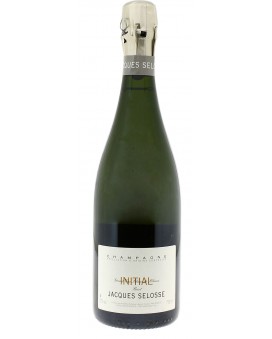
Champagne Selosse Grand Cru Brut Initial 75cl
The Grand Cru Brut Initial from JACQUES SELOSSE is a superb cuvée, elaborated from a blend of three vintages.558,00 €Order limited to 1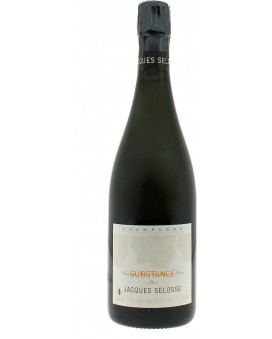
Champagne Selosse Substance 75cl
The wonderful Cuvée Substance from Maison JACQUES SELOSSE is a Blanc de Blancs champagne Grand Cru produced in very small...1 194,00 €Order limited to 1
What is a Blanc de Blancs Champagne?
100% white grapes
Blanc de Blancs is simply a Champagne made exclusively from white grapes. Unlike most Champagnes (which blend white and red grape varieties vinified as white wines), Blanc de Blancs contains no trace of Pinot Noir or Meunier. In practical terms, in almost all cases, you’re getting a 100% Chardonnay. And it is precisely this purity that makes it so unique.
In fact, its name literally means “white made from white grapes,” as opposed to Blanc de Noirs , which, as you may have guessed, is a white wine made from black grapes. This designation is governed by the Champagne AOC specifications and guarantees the origin and composition of every bottle.
Authorized (and Forgotten) Grape Varieties
While Chardonnay reigns supreme in this category, it’s important to note that the Champagne AOC specifications actually authorize several white grape varieties:
- Petit Meslier, a very rare heirloom variety that is tentatively making a comeback among dedicated winemakers;
- Arbane, a nearly extinct variety grown on just a few hectares throughout the entire region;
- Pinot Blanc, another lesser-known variety but one used by certain independent winemakers committed to biodiversity.
Some independent winemakers are specifically capitalizing on these forgotten grape varieties to offer unconventional Blancs de Blancs that bear witness to a vanishing part of Champagne’s heritage. If you want to venture off the beaten path and support this approach, keep an eye out for the labels: these rare cuvées often offer surprising aromatic profiles, more floral or more herbaceous than pure Chardonnay.
Blanc de Blancs: A Recent Tradition in Champagne
A Latecomer to the Champagne Landscape
Contrary to what one might think, Blanc de Blancs is a relatively recent creation in the millennia-old history of Champagne. For a long time, the Côte des Blancs and its Chardonnay grape were even looked down upon by the great houses, which criticized them for a lack of structure and power. The Champagne tradition had historically been based on blending the three main grape varieties, and making Champagne from a single white grape variety was practically considered heresy in the 19th century.
This historical skepticism also explains why the greatest Chardonnay terroirs of the Côte des Blancs were long undervalued. It wasn’t until the 20th century that the true character of the terroir came to the fore and Champagne’s Chardonnay took its rightful place.
Charles Heidsieck, the Pioneer of 1906
It was the House of Charles Heidsieck that paved the way in 1906 by producing the first cuvée marketed under the Blanc de Blancs appellation. It was a bold move for the time: going against a centuries-old tradition of blending was a true commercial gamble. But the style gradually won over a clientele seeking finesse and elegance, who discovered in this champagne a unique character—fresher and more precise than traditional blends.
Postwar Growth and Modern Recognition
It wasn’t until after World War II, however, that Blanc de Blancs truly took off. In the 1950s, several major houses launched their own prestige cuvées made entirely from Chardonnay: Taittinger created Comtes de Champagne in 1952, Ruinart gradually became the iconic house of Blanc de Blancs, Salon specialized exclusively in this style and became the gold standard.
Today, Blanc de Blancs has established itself as a category in its own right, recognized worldwide. A fine comeback for a style that initially had a bad reputation, yet now stands as one of the purest and most sought-after expressions of modern Champagne.
Aromatic Profile of Blanc de Blancs Champagnes
Color and Bubbles
To the eye, a Blanc de Blancs displays a crystalline color of great purity, generally very pale, with silvery highlights in younger vintages and tending toward light gold—or even coppery gold—in more mature vintages. This luminous, translucent color is the style’s first visual hallmark: it’s impossible to mistake a young Blanc de Blancs for a classic brut or a Blanc de Noirs, both of which have a deeper color.
The effervescence, too, attests to the wine’s quality. The bubbles in a great Blanc de Blancs are fine, elegant, and persistent, forming a beautiful string of bubbles at the surface of the glass. This fineness of the bubbles, a sign of meticulous production, contributes greatly to the sensation of refinement on the palate.
On the nose: a distinctive bouquet
In terms of aromas, there is a very distinctive signature that evolves over time. In a young Blanc de Blancs, the primary aromas (those derived directly from the grape variety) dominate: vibrant citrus fruits (lemon, lime, white grapefruit), crisp white fruits (green apple, fresh pear), and delicate floral notes (hawthorn, acacia, vine blossom). This is the typical palette of a young Champagne, full of freshness and vibrancy.
After a few years, secondary aromas develop: notes of brioche, butter, fresh biscuit, and fresh almond. These aromas arise from the wine’s prolonged contact with the yeast lees during aging. For age-worthy cuvées, after ten years or more, tertiary aromas emerge: toasted brioche, dried fruit, acacia honey, and sometimes toasted hazelnut or even subtle toasted and roasted notes. An aged Blanc de Blancs then reveals its full complexity, without ever losing the signature mineral and saline character that defines it.
On the palate: the signature freshness and minerality
It is on the palate that the Blanc de Blancs fully expresses its personality and reveals its Champagne DNA. The attack is generally lively and precise, supported by a finely chiseled acidity that awakens the taste buds. Next comes that characteristic texture—creamy thanks to the fine bubbles, yet taut due to the Chardonnay’s natural acidity. The finish is long, salty, almost iodine-like, with that famous chalky minerality that can linger on the palate for twenty or thirty seconds in the great vintages.
To give you a concrete example, a young Blanc de Blancs Grand Cru from Mesnil-sur-Oger will offer a lively attack of lemon and green apple, followed by a taut, mineral finish that lingers for a long time. After a few years in the cellar, this same champagne will develop rounder notes of brioche and almond, gaining liveliness and roundness while retaining that characteristic tension that is its signature.
Dosage Levels for Blanc de Blancs
Brut Nature and Extra-Brut: absolute purity
The dosage in champagne—as I’ve mentioned—is the liqueur added after disgorgement that determines the champagne’s final sugar level, and thus its style. The entire range is available in Blanc de Blancs, from the driest to the sweetest, with modern preferences increasingly leaning toward lower dosages to let the terroir shine through.
The Brut Nature (also known as Zero Dosage, Dosage Zero, or Brut Zero) has no added sugar, and the sugar content is less than 3 grams per liter. It is an ultra-tight, straightforward style that shows no mercy to grapes of average quality and should be reserved for great terroirs capable of supporting this bare-bones approach. When made from a well-ripened Grand Cru Chardonnay, the result can be stunning in its purity.
The Extra-Brut, on the other hand, allows between 0 and 6 grams of sugar per liter. It is also very pure, but with a bit more roundness that balances the Chardonnay’s natural acidity and makes it slightly more approachable.
Brut: the classic style
With less than 12 grams of sugar per liter, Brut accounts for more than 90% of the Blanc de Blancs sold worldwide. It’s the versatile style, offering a beautiful balance between liveliness and roundness, ideal both as an aperitif and with a meal. If you’re new to the world of Blanc de Blancs, a well-balanced Brut remains the best place to start to get a feel for the style without immediately facing the austerity of a Brut Nature.
Demi-Sec and Doux: for desserts
Much rarer in Blanc de Blancs, but this style does exist. The Demi-Sec, with between 32 and 50 grams of sugar per liter, pairs beautifully with fruit desserts or pastries that aren’t too sweet. Doux, with over 50 grams per liter, has all but disappeared today: a relic of 19th-century tastes, now found only in a few niche cuvées.
A quick tip to avoid falling into the trap: a lower dosage doesn’t mean a better champagne. It’s just a different style. Personally, I find that a well-balanced Brut from a great terroir can be much more expressive and harmonious than a somewhat austere Brut Nature from a less noble terroir. It’s up to you to taste several dosages side by side and form your own opinion: that’s how you really get to know your own tastes.
The Terroirs of Blanc de Blancs: The Côte des Blancs and Beyond
The Côte des Blancs, the Chardonnay’s land of choice
South of Épernay lies a long strip of east-facing hillsides that constitutes the historic birthplace of Blanc de Blancs: the Côte des Blancs. And its name is no coincidence, since Chardonnay accounts for nearly the entire vineyard stock there. This strip of land, about twenty kilometers long, is home to some of the world’s greatest Chardonnay terroirs, comparable in reputation to the finest climats of Burgundy.
Six communes here bear the prestigious title of Grand Cru and are the true stars of Blanc de Blancs. Cramant, located in the northern part of the Côte, is renowned for the roundness and generosity of its wines, with a sunny, indulgent expression of Chardonnay. Avize, just to the south, is famous for its elegance and aromatic precision: it is undoubtedly the most balanced cru on the Côte. Oger stands out for its remarkable floral finesse, ideal for aperitif cuvées. Le Mesnil-sur-Oger, an exceptional terroir, produces the most taut, mineral-driven, and age-worthy Blancs de Blancs, notably including the Salon and Krug Clos du Mesnil cuvées. Chouilly is unique in that it is classified as a Grand Cru for its Chardonnay and a Premier Cru for its Pinot Noir; finally, Oiry, the most understated of these Grand Crus, boasts a limited production.
Other villages on the Côte des Blancs also deserve your attention: Vertus and Cuis offer Premier Crus of very fine quality, often at more affordable prices than the region’s four star-rated estates.
Other Chardonnay Terroirs
The Côte des Blancs does not have a monopoly on Champagne’s Chardonnay, and several other regions also produce excellent Blancs de Blancs with distinct profiles. The Côte de Sézanne, located south of the Côte des Blancs, offers a sunnier, fruitier style that is generally more affordable and ready to drink sooner—an excellent starting point for discovering this style. On the Montagne de Reims, particularly in the villages of Trépail and Villers-Marmery, one finds more structured and mineral-driven Chardonnays with a distinctive character. The Coteaux du Sézannais and certain sectors of the Marne Valley round out this overview, with cuvées that are sometimes lesser-known but exceptionally well-crafted.
Why chalk makes all the difference
The great secret of the Blanc de Blancs terroirs lies in their chalky subsoil. The soils of the Côte des Blancs rest on a layer of chalk up to 200 to 300 meters thick, a geological remnant of an ancient sea that covered the region 70 million years ago. This chalk acts as a natural sponge that regulates the vines’ water supply, storing water in winter and gradually releasing it during the growing season.
In practical terms, this chalky subsoil gives Chardonnay a highly recognizable mineral character: that iodine-like, salty, almost mouth-watering sensation on the palate. This is the famous “chalky tension” that tasters speak of, and it is precisely what distinguishes a great Champagne Blanc de Blancs from any other sparkling Chardonnay in the world. Champagne’s chalk also provides exceptional storage conditions in traditional cellars—the famous chalk cellars dug as far back as the Gallo-Roman era beneath the cities of Reims and Épernay, where millions of bottles are now aged at ideal temperature and humidity levels.
Why Choose a Blanc de Blancs?
There you have it—you now have all the keys to understanding, choosing, and tasting your Blanc de Blancs with confidence. To recap the essentials, remember that it is a champagne made entirely from white grapes (primarily Chardonnay). The Côte des Blancs, with its exceptional chalky soils and four star Grand Crus (Cramant, Avize, Oger, Le Mesnil-sur-Oger), remains its absolute benchmark terroir.
Its typical aromatic profile combines citrus freshness, crisp white fruits, white flowers, and that signature mineral and salty character—which can evolve into brioche and buttery notes with aging. It pairs wonderfully with seafood, delicate fish, and raw dishes, and is best served between 8 and 10°C in a tulip-shaped glass to fully appreciate all its subtleties. Its remarkable aging potential—particularly for the top vintages—also makes it a true champagne for the long term.
Whether you’re looking for an affordable aperitif cuvée around 30 euros, a beautiful magnum for a special occasion, a gift set for a loved one, or a Grand Cru to age in your cellar, you’re sure to find the Blanc de Blancs that’s right for you in our online store. Explore our Blanc de Blancs Champagne catalog now: prestigious houses, lesser-known independent winemakers, half-bottles, magnums, vintage and non-vintage cuvées, in gift boxes or on their own, for every budget.
Feel free to filter our selection by house, dosage (Brut, Extra-Brut, Brut Nature, Demi-Sec), or price range to narrow down your choices based on your current preferences. I’m counting on you to be curious, compare several cuvées of different styles, and form your own opinion: that’s how you truly learn to discover and appreciate Blanc de Blancs. Enjoy your tasting!
What is the best Blanc de Blancs Champagne?
It all depends on your budget and personal tastes. Among the most renowned top-tier brands, Dom Ruinart, Taittinger’s Comtes de Champagne, Krug Clos du Mesnil, and the cuvées from Salon are usually cited for the very high end of the market. As for independent winemakers, Pierre Gimonnet, Pierre Péters, and Agrapart offer remarkable value for the price and a much more personal expression of the terroir.
What is the average price of a good Blanc de Blancs?
The price of a Blanc de Blancs starts at around 30 euros per bottle for entry-level cuvées, mainly from independent winemakers and cooperatives. Expect to pay 40 to 80 euros for a fine cuvée with more Premiers Crus than Grands Crus, 80 to 200 euros for a Grand Cru from the Côte des Blancs, and over 200 euros for the prestige cuvées from the major houses.
Why is Blanc de Blancs more expensive than a classic Champagne?
Several factors explain this premium pricing: the relative scarcity of Chardonnay in Champagne (about 30% of the region’s vineyards), the concentration of the great terroirs solely in the Côte des Blancs, the more delicate production process—which requires rigorous grape selection and particularly careful pressing—and, of course, the style’s historic prestige among connoisseurs and collectors.
Trusted Reviews
97% of satisfied customers Shipping 24H
Order before 11AM Gift Message
free + 1200 références
in stock Storage
Hydro-regulated Secure Payment
Credit Card, Amex, Paypal, Bank transfer 
Interdiction de vente de boissons alcooliques aux mineurs de moins de 18 ans.
La preuve de majorité de l’acheteur est exigée au moment de la vente en ligne
Code de la santé publique.Art L.3342-1 et L.3353-3