History of Ruinart champagne
The brand claims to be the oldest Champagne House, dating back to 1729. A few years earlier, Dom Thierry Ruinart, a Benedictine monk, heard a lot of talk about a "bubbly wine" that was causing quite a stir at social gatherings. He was convinced that this drink had a bright future, and passed on his enthusiasm to his family, and in particular to his nephew, Nicolas, who would go on to create the Ruinart Champagne House. This visionary aspect is characteristic of the house, for only 35 years after its creation, it is producing and marketing rosé champagne.
Over time, the company expanded, acquiring the chalk quarries beneath the city of Reims. These are quarries where chalk is mined. At the end of their life, they are used for growing mushrooms (Paris mushrooms) or as champagne cellars. In this way, the wine matures slowly and optimally.
At the beginning of the 20th century, the company went through a difficult period. It was bought by Moët et Chandon in 1963. Both houses were subsequently acquired by the LVMH group in 1987. Despite this integration into a large group, the brand retains a strong identity that has led it to the success it enjoys today.
Ruinart today
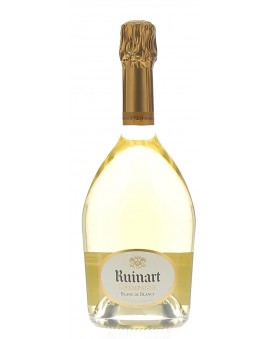
It was in the 1980s that the brand made the turnaround that has contributed to its current success. Cellar master Jean-François Barot redesigned Ruinart cuvées around chardonnay, which became the common thread running through the entire range. Their Blanc de Blancs champagne became the emblem of the House's success. This change of direction affected both the production and marketing of the champagnes, with prestige bottles that enhanced the brand's image in the early 2000s. This qualitative policy has led to the brand's continued success, year after year.
The quality and finesse of these cuvées are now the responsibility of cellar master Frédéric Panaïotis (in place since 2007). The Ruinart style is recognized worldwide, and demand is such that it is sometimes difficult to find all the cuvées available at the end of the year...
If you'd like to discover the exceptional history of this House, you can visit the crayères in which Ruinart champagnes are stored. These galleries have been listed as a Unesco World Heritage Site since 2015!