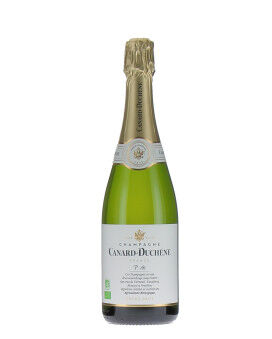
P.181, organic champagne from Canard-Duchêne

Publié par Julia Bouchet - 24/08/2021 - Champagne Houses and Winegrowers

Canard-Duchêne was founded in 1868, with the marriage of Léonie Duchêne, a winemaker, to Victor Canard, a cooper. Over time, the company changed hands several times, and was finally acquired by the Alain Thiénot group in 2003. At the time, Canard-Duchêne was well known in France, but had fallen into disuse. The brand took the gamble of (re) updating the Canard-Duchêne style, and moving into channels where it hadn't been: export and CHR (Cafés, Hôtels, Restaurants). Since then, a great deal of work has been done, the style has evolved, the range has been extended and the style refreshed.

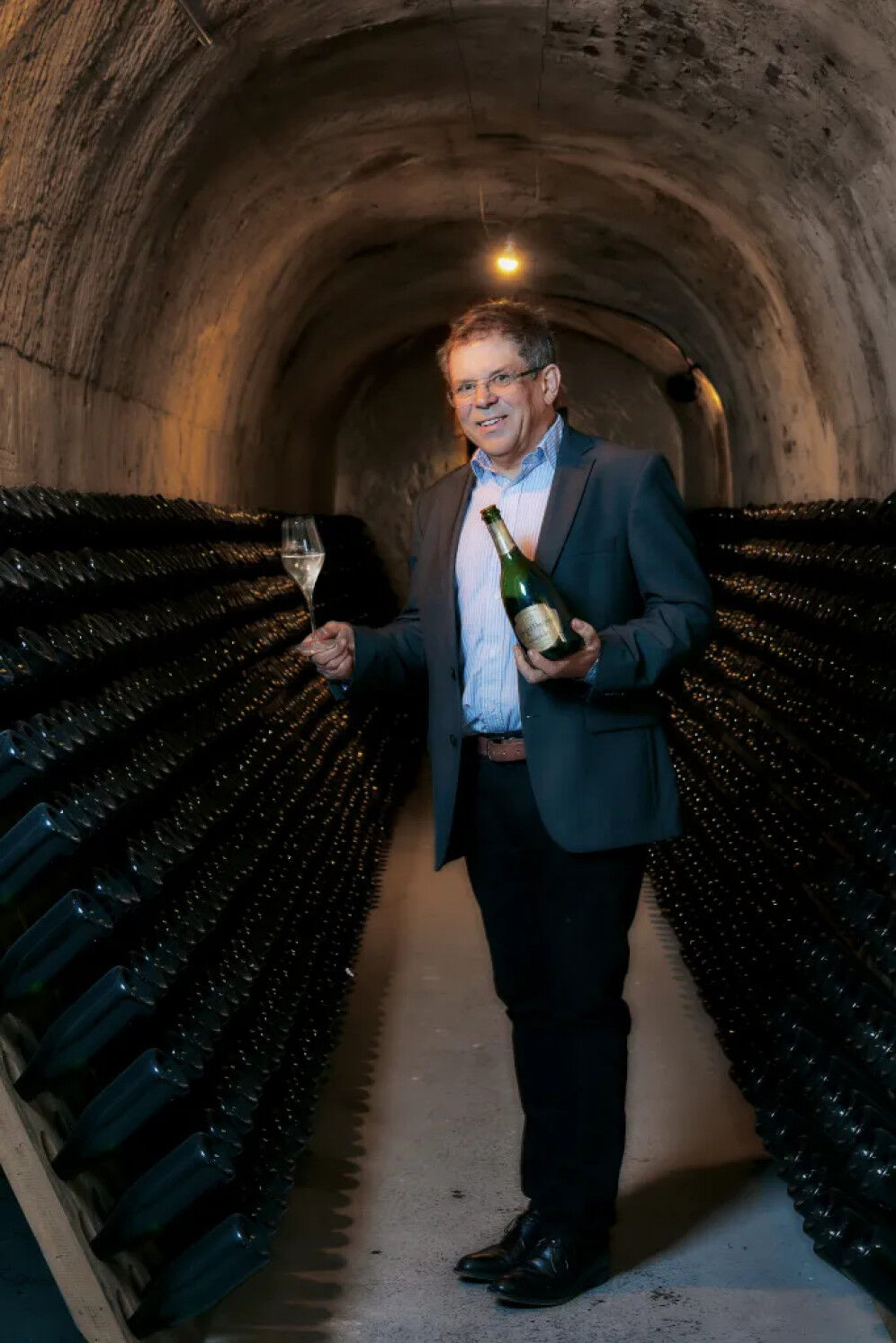
Today, Canard-Duchêne is an innovator in Champagne, as with its organic cuvée P.181 launched in 2009 by Laurent Fédou, the House's cellar master.

Laurent-Fedou-CANARD-DUCHENE-683x1024 - Copie

Laurent Fédou, how did you launch your first organic cuvée?

Today, all wine merchants are discovering organic, but back in 2009, I had a good friend called Bruno Michel, who was an organic winegrower and who sold us grapes from the edge of his plots. He wasn't sure whether the rest was really organic.We worked hard together to convert his entire vineyard to organic.And Canard-Duchêne and I decided that this was the right thing to do, to enter a market where no one else was.This parcel became 181, of 7 hectares inVerneuil.We supplement the cuvée with other wine suppliers who have followed the company's organic approach.

How many winegrowers do you have working for Canard-Duchêne today?

Around 150.

How many are organic?

Less than 10.We're very selective.We get more offers to sell organic grapes than we want to buy.If someone says "I'm going organic", okay, but come back in 5 years.We don't want to buy from new converts to organic.Organic conversion isn't just 3 years, it takes a long time.We have absolute confidence in the few winegrowers with whom we work organically.We do, however, carry out regular checks, taking samples from all the tanks, freezing and analyzing them. Today, we are the world's largest producer and marketer of organic champagne.

Does parcel 181 belong to the Canard-Duchêne group?

Yes, it's the easiest parcel to convert to organic, because it has no neighbors, which reduces the risk of contamination by treatments from neighboring winegrowers.

How do you make this cuvée?

All our Chardonnays are fermented under wood, representing 40% of the volume.Our aim is not to make a woody champagne, but rather to find complexity with wood.It adds a kind of spiciness.

What is the profile of this cuvée P.181?

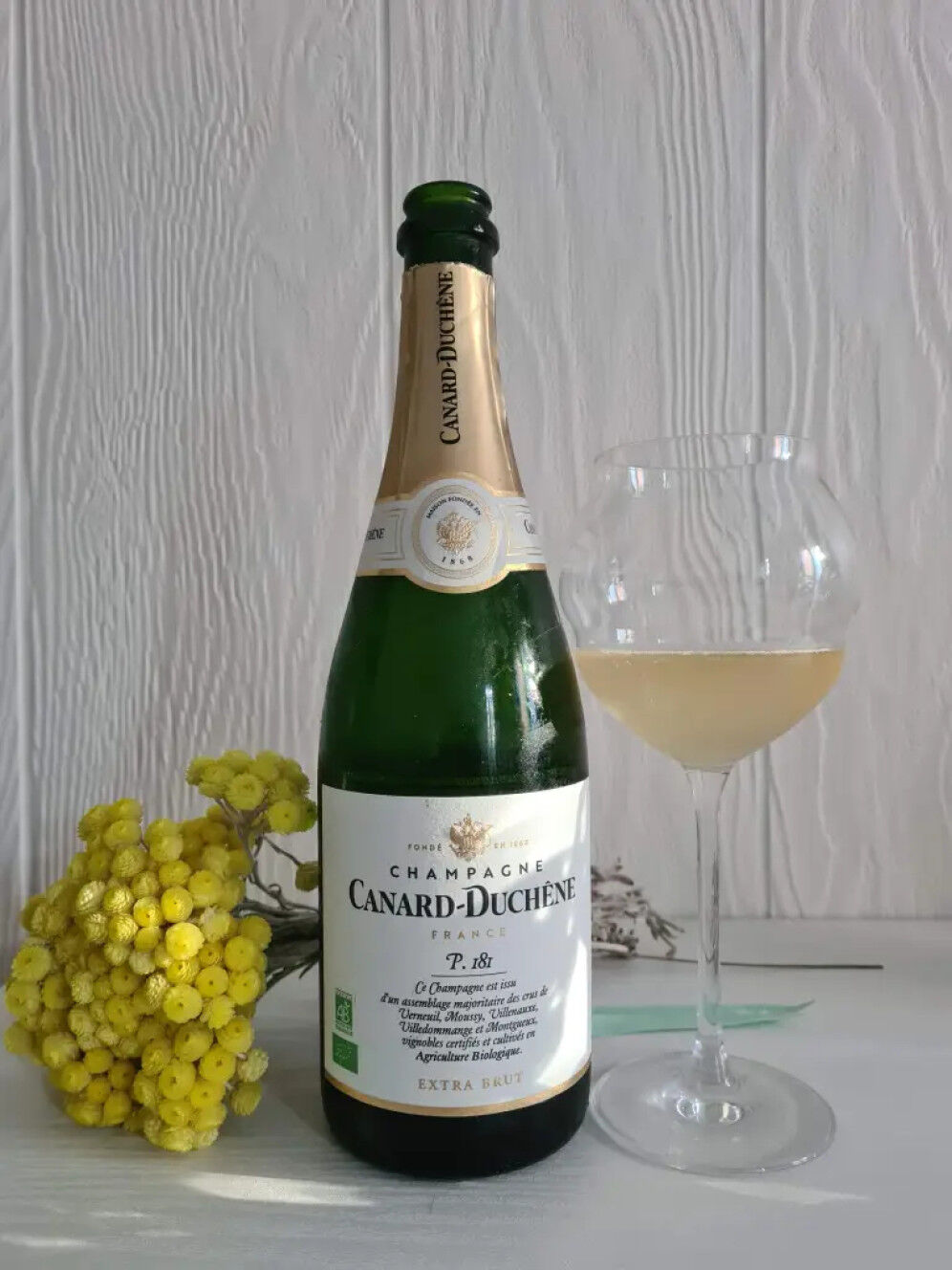
I'd say it's bursting with fresh fruit.We're based on the 2018 harvest, with 42% Pinot Noir, 36% Chardonnay and 21% Meunier.On opening, it smells of yellow fruit, with hints of pineapple and apricot....Organic champagnes are no different in reality, but each time I perceive a different aromatic freshness.I can't explain it, but perhaps the grapes go through their cycle differently, and express themselves differently.It's as if a blotter had been removed from the freshness.These are resolutely fresh wines.
For me, a successful wine is one that is balanced on the nose and palate.On the palate of this cuvée P.181, we remain faithful to the nose, with an explosion of fruit.It's taut and fresh, and with aeration, we discover other aromas that move towards grapefruit and pineapple, a little more cooked.
20210719_195537-768x1024 - Copie

Why have you kept this wine as an extra-brut?

It wasn't my intention from the start, but it was through blind tasting, in random order on different dosages, that this wine expressed itself best in extra-brut.The evolution of the Champagne climate means that wines need less sugar than they did some time ago.This was a daring choice for Canard-Duchêne, since extra-brut is not necessarily the territory of négociants either.

Is there a real consumer demand for organic products?

Very strong today.The first few years were very difficult.When we launched cuvée P.181, we couldn't find a consumer for it.Being an organic wine merchant creates doubt.The bottle's marketing positioning wasn't very good either, but in recent years, demand has been extremely strong.We've almost reached the point where we limit our bottles to make sure there's enough for everyone.

Are you planning other organic cuvées, or other developments in this direction?

We're thinking about converting other plots, but it's not easy and it takes a lot of time.But we're not going to create a complete organic range.We already have P.181 which we produce in large quantities, and with very good quality.
Our aim is to maintain this quality with this lovely cuvée.

Discover Canard-Duchêne champagnes

Champagne Canard Duchene

The House of Canard-Duchêne, founded by Victor Canard and Léonie Duchêne, has been located since its creation in 1868 in Ludes, in the Montagne de Reims. Internationally renowned and a member of the court of Tsar Nicolas II, it has recently joined the Alain Thiénot Group, and today occupies a place of choice on the French and European markets.

In 2004, Canard Duchêne committed itself to sustainable development and respect for the environment, thus promoting its hillsides, its cellars and its House, which has been listed as a UNESCO World Heritage Site since 2013.

The Canard Duchêne brand offers several cuvées of authentic, fruity and intense champagne to be enjoyed during your aperitifs.

Partager
Trusted Reviews
97% of satisfied customers
Shipping 24H
Order before 11AM
Gift Message
free
+ 1200 références
in stock
Storage
Hydro-regulated
Secure Payment
Credit Card, Amex, Paypal, Bank transfer
Added to cart !
Limité à 3 bouteilles. Nous les avons ajoutées à votre panier.
Quantity
Continue shopping