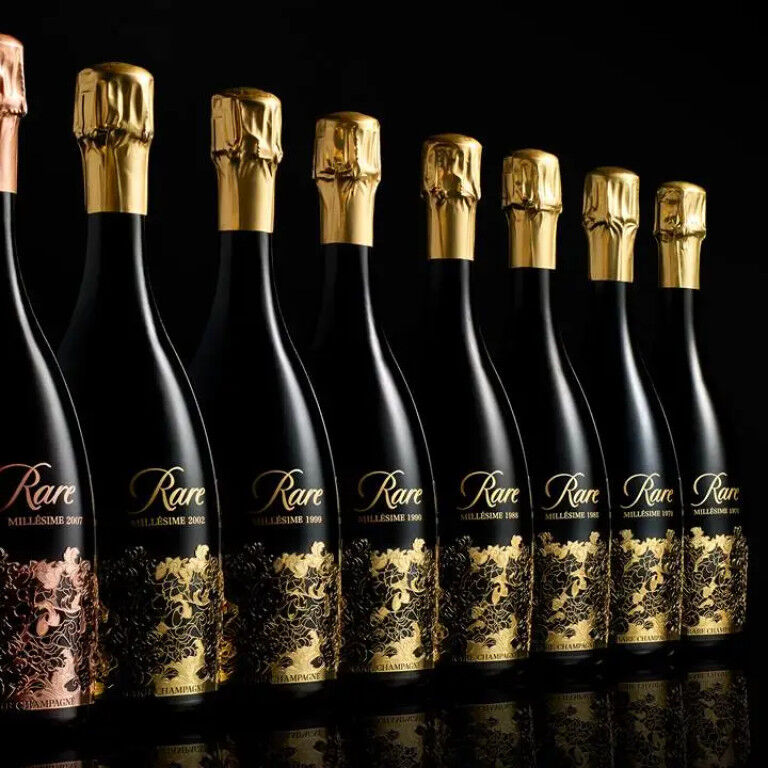
Rare Champagne in figures
Rare Champagne cuvées are always made from 70% Chardonnay from the Côte des Blancs and Montagne de Reims, which brings an incredible, precise minerality, and 30% Pinot Noir from the heart of the Montagne de Reims, (Verzy or Aÿ in particular), with its pure, silky texture.
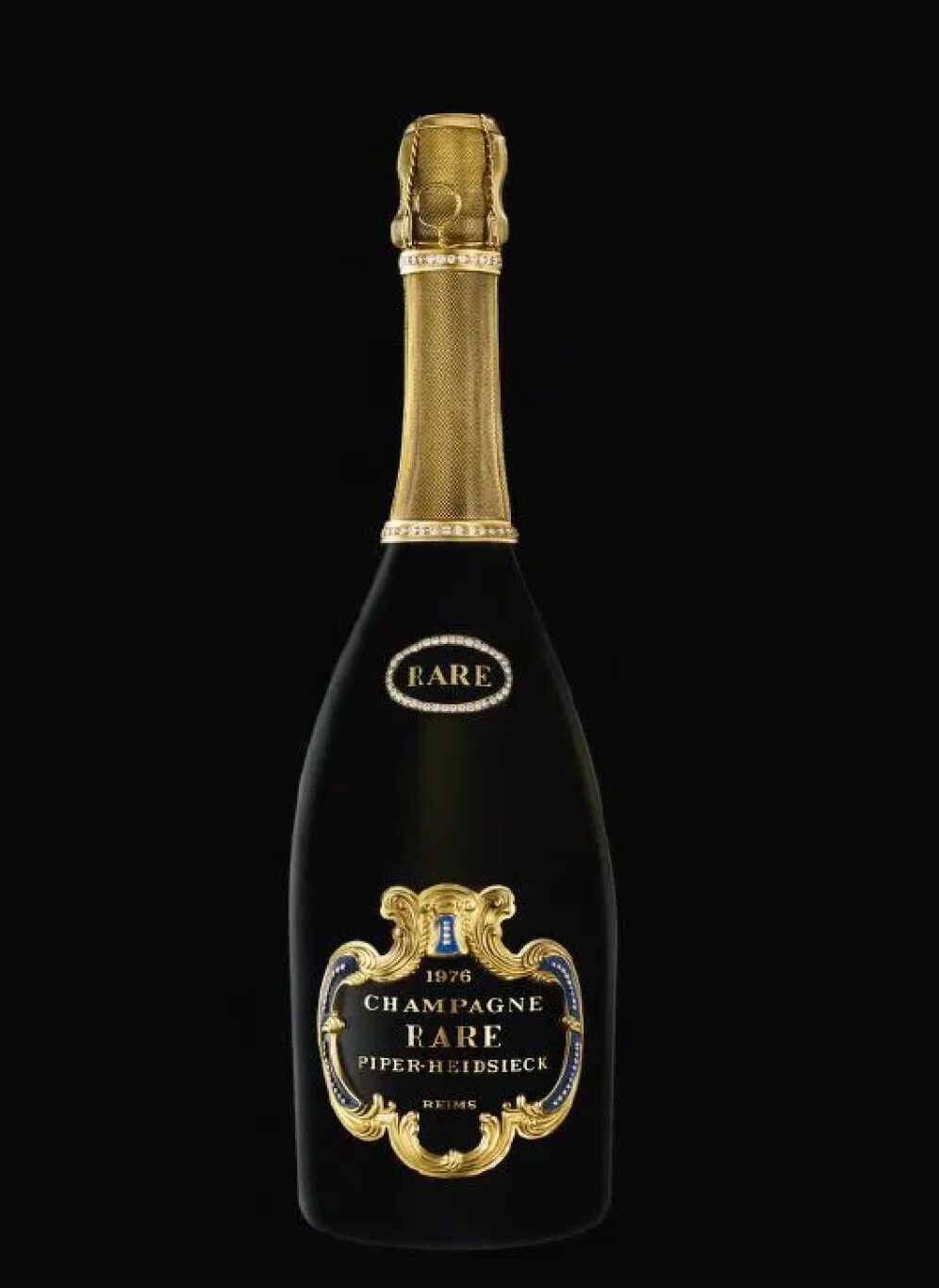
Vinified only in exceptional years, each Rare Champagne vintage combines 3 essential parameters:the expertise of Régis Camus, the House's prestigious Chef de Caves, maturation time in optimal conditions, and a truly atypical year.These are the years when, despite weather that seems to have lost its mind, the grapes can express the quintessence of their aromas and develop unexpected, singular notes. Thus, for example, Rare Millésime 1976 was born of an unprecedented drought, 1979 of a cold, rainy spring resulting in late flowering and harvesting, and Rare Millésime 1985 of a terrible black frost.
Only 12 cuvées have been made in 45 years: 1976, 1979, 1985, 1988, 1990, 1998, 1999, 2002, 2006, 2008 and Rare Rosé Millésime 2007 and Rare Rosé Millésime 2008.
The wines are aged on lees for a minimum of 8 years.There are a few exceptions, with the 2008 Rare Rosé Millésimée aged for 10 years, 2006 Rare Millésimé which spent 12 years in the House cellars, and 1998 Rare Millésimé which took the time to assert itself over 20 years.
The Rare Champagne style
At once oriental and fresh, mature and warm, Rare Champagne is pampered by the magical hands of Régis Camus, named Sparkling Wine Cellar Master of the Year by theInternational Wine Challenge eight times between 2004 and 2013. Rare Champagne reveals notes of sweet spices and fresh tropical fruit, sometimes candied.
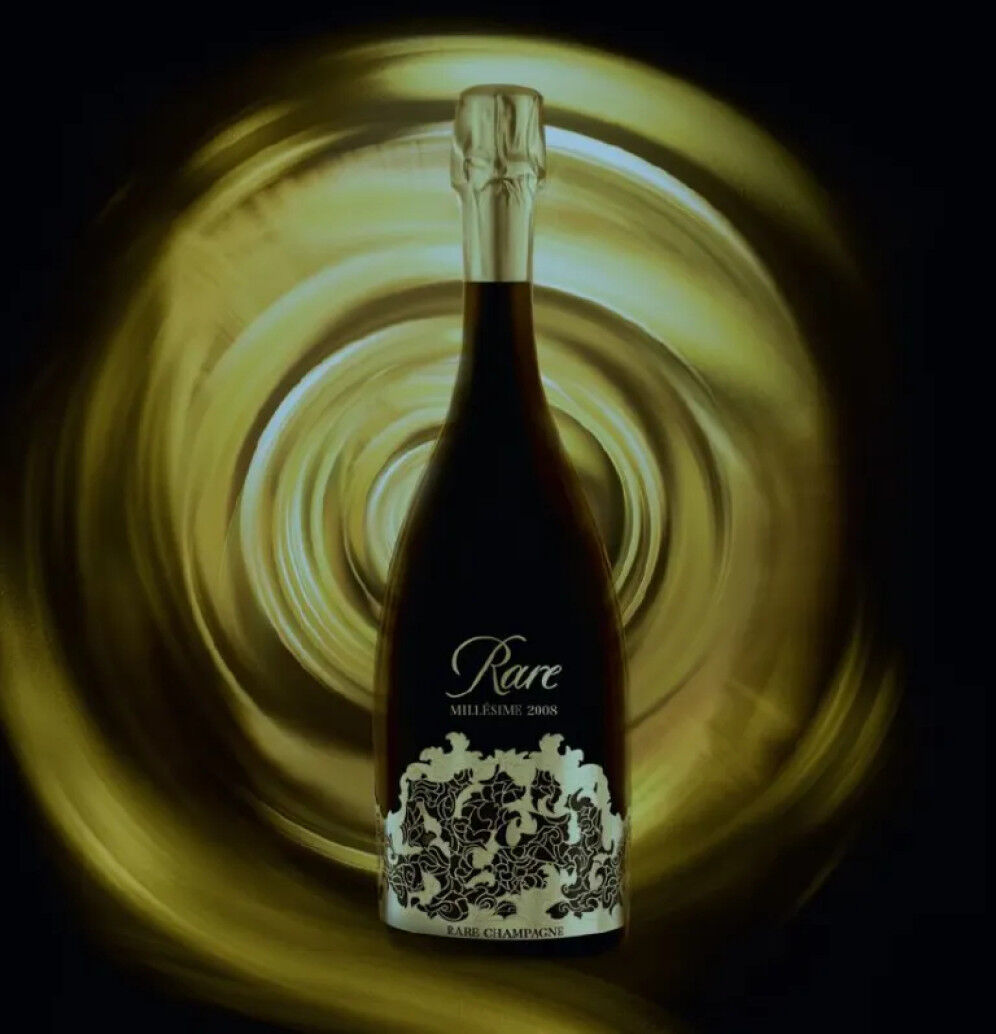
Rare vintage 2008
"If there's one word to explain 2008, it's infinite," says Régis Camus.
While most Champagne houses have released their 2008s in 2018, the Chef de Caves waits, tasting his wine until his " labor of passion and love " is ready to be revealed to the public in early June.
2008 is an exceptional year in Champagne, with an unpredictable climate. A mild winter, a cold spring and a rainy growing season. The resulting wine is " a fresh, structured, harmonious composition ".
On tasting, the scents are floral, moving towards orange blossom and hyacinth. Then there's another flower, vanilla, combined with fresh coconut and pear. It's springtime, and a constant cycle of aromas on the palate. It's young, fresh and crisp, with fresh pineapple, passion fruit, kiwi, coconut and tart citrus. The finish is punctuated by salinity, remarkable and iodized.
A graceful champagne for hedonists only, to pair with oysters, grilled sole, langoustines, candied peppers, or for dessert with milk chocolate, mango and passion fruit or caramelized pineapple.