Champagne, a land of wines
Did you know? Evidence of domestic vine cultivation in Champagne dates back to the 1st century.
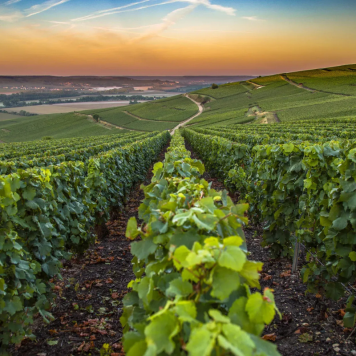
Champagne's vineyards are ideally located for their development. The region was located on the main trade routes during the development of the Champagne fairs in the Middle Ages, and has enjoyed a strategic position throughout the ages.
What's more, the Champagne region's combination of oceanic and continental climates is unique among French vineyards. In general, the region enjoys a temperate climate, neither too hot nor too cold, with plenty of sunshine and regular rainfall to supply the vines with water.
Dom Pierre Pérignon, a precursor in the history of Champagne wines
In the 17th century, Dom Pierre Pérignon worked with other monks to produce the wine marketed by his abbey, Abbaye de Hautvillers.
While blends were more or less haphazard at the time, Dom Pierre Pérignon developed much more thoughtful blends, playing with the complementary nature of the wines and the different crus. The high quality of his wines contributed to the renown of Champagne wines and to the development of their marketing.
Champagne wines, a designation known since 1690
Until the Middle Ages, wines produced in France were referred to as "vins de France". Over the years, however, the wines produced in Champagne met with great success, and winegrowers developed techniques to produce sparkling wines. As early as 1690, the appellation "vins de Champagne" was developed to designate wines produced exclusively in Champagne.
The Champagne appellation, a French AOC recognized since 1936
From the end of the 19th century onwards, the people of Champagne worked to protect the Champagne appellation, which became a coveted and successful brand. In 1936, one year after the creation of the Appellation d'Origine Contrôlée (AOC) concept, the Champagne appellation was recognized and protected.
Today, the Champagne appellation is recognized in over 130 countries and protected - among other things - by the Comité Champagne.
Did you know? Champagne is only produced in Champagne, but some of the great names in champagne are German (Krug, Mumm...). Indeed, in the 19th century, champagne was still struggling to make a name for itself beyond its borders, but many Germans chose to settle in Champagne to invest in this market.
Champagne, a committed industry
Since the 1980s, the Champagne industry has been committed to actions aimed at reducing the impact of its activities on the environment, in order to preserve its terroir.
In 2003, Champagne became the first winegrowing region to carry out a carbon footprint assessment, and the region is committed to developing more environmentally-friendly methods, with the ambition of reducing its carbon footprint by 75-80% by 2050.
More than just a drink, champagne is an elixir that represents its region. Through the history of champagne, we discover an entire territory, as well as pieces of French history.