What is vintage champagne?
A vintage champagne is a champagne from a single year. The vintage year on the bottle is therefore an indication of the year in which the grapes were harvested and the wine was made. It also serves as a benchmark for the consumer, as not all years are created equal, and shelf life will vary greatly depending on the quality of the vintage.
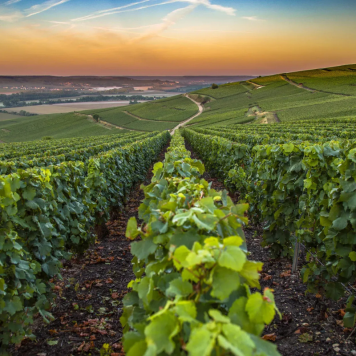
Each harvest differs according to the climatic conditions prevailing throughout the year. The climate at each stage of the vine's development will mark the vintage. The year of harvest is therefore decisive for the quality of the grapes and therefore of the champagne. So when you buy a champagne from a particular vintage, you're already getting an indication of the product's quality. Some champagne houses, such as Salon or Dom Pérignon, only vintage their champagne when the year is exceptional, but most vintage at least one of their cuvées every year. The rule is that a vintage champagne can only be sold after it has rested a minimum of 36 months in the cellar. However, some Houses have chosen to let their vintage champagnes age longer, so that the wine gains in complexity. And some vintages are released after 5 or even 10 years in the cellar for the most promising. While the three-year minimum resting period must be respected, it's up to each house to decide whether to let its vintage champagnes age longer.
Vintage champagnes and how to store them
Although most champagne consumers drink it within hours or even days of purchase, since champagne is a wine, it can be stored.
A vintage champagne is more likely to be kept than a non-vintage brut. However, the length of time it can be kept depends on the year in question. Some vintages are at their peak now, and waiting would be pointless, while others will improve with age. Most vintages can be kept for 2 to 4 years. But some great vintages can be kept for one or more decades. The magnum is the ideal container for these vintages.
Of course, it's not just the shelf life that's important, but also the conditions in which your bottle is stored. Here are a few recommendations.
Ideally, the place(cellar or other) where you let your champagne "age" should :
- be protected from light
- have a constant humidity level of around 70%.
- allow bottles to be kept lying down (to prevent the cork from drying out).
Under these conditions, fine vintages (such as the 2012 Champagne vintage) will quietly develop all their complexity...
The best champagne vintages
Some vintages are highly sought-after for their exceptional quality and ageing potential. Some vintages are currently highly sought-after. Examples include 2002, 1996, 2008 and 2012.... We've put together a brief summary of the quality of all these exceptional vintages to help you make your choice.
This little guide will enable you to buy with peace of mind the vintages you don't want to miss, whether for a special occasion or to keep preciously in your cellar. What's your favorite vintage?