Sales of rosé wines have grown enormously over the past 10 years, and rosé champagnes have been no exception. In 2021, rosé champagne export volumes reached 20 million bottles, according to the Comité Champagne, an increase of 20.27%! What was once considered a "popular" category, a fruity champagne with a high dosage designed to satisfy the crowds, has become a diversified segment of champagne, with bubbles that are fruity or mineral, easy-drinking or complex, light or dark in color. And the diversity doesn't stop there.
Whereas in the past, most producers had just one rosé champagne in their portfolio, today many offer two or more rosé cuvées. And a few don't hesitate to reserve some of their best parcels for the production of exceptional terroir rosés.
If all you see is an endless palette of pretty pinks, and you don't know what to expect behind the champagne labels, or how to find your own style of rosé champagne, we're here to help and provide a detailed answer to a recurring question: how is rosé champagne made?
Rosé d'assemblage
Technically known as rosé d'assemblage, this sub-category of rosé champagne is by far the most commonly produced rosé champagne, and simply bears the name Rosé on most labels.
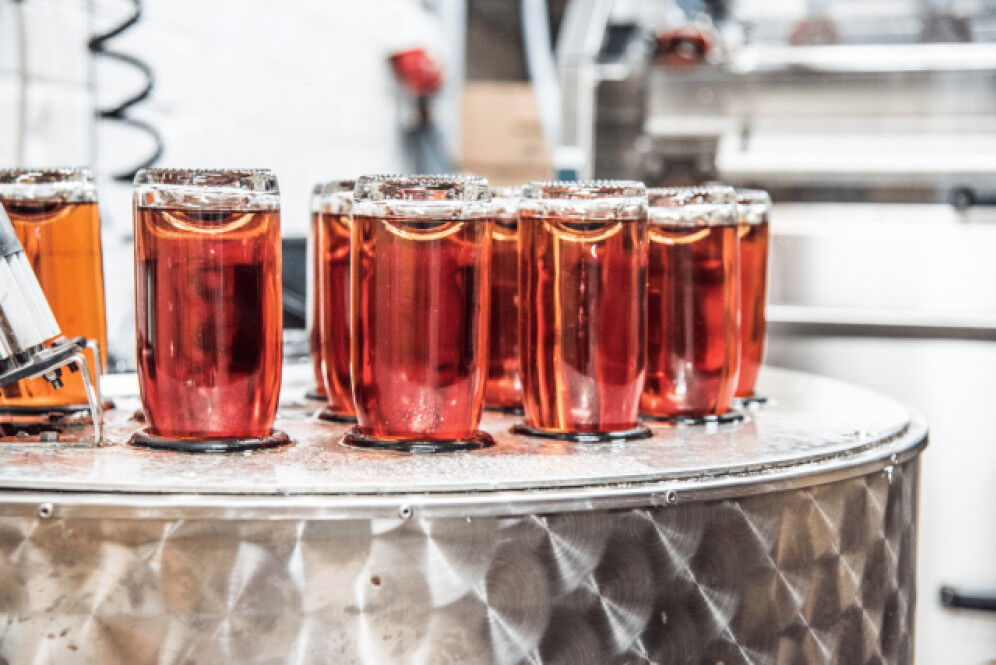
Production begins with the normal vinification process for basic wines. Once alcoholic fermentation is complete, these "white" base wines are blended in theassemblage phase, during which different terroirs, grape varieties or vintages and reserve wines are brought together in a final cuvée. Bottled and stored in the cool chalk cellars, these wines then undergo the second fermentation, the prise de mousse, to develop the fine bubbles for which Champagne is renowned.
To create a rosé d'assemblage, 5-20% of still red wine is added at the blending stage - a proportion that not only produces a pretty color, but also modifies the structure, body and aromatic expression of the future champagne.
Delicious color for rosé champagne: red wines from Coteaux Champenois
The added red wine can come from either of the two black-skinned Champagne grape varieties, Pinot Noir or Meunier, and must be produced according to the strict requirements of theCoteaux Champenois Appellation d'Origine, just as Champagne must follow the rules of theChampagne Appellation d'Origine.
Many producers choose to buy Coteaux Champenois red wines for their rosé blends, because they don't have enough Pinot Noir or Meunier grapes planted in their vineyards, or because they don't want to go into red wine production themselves. Some passionate producers, however, are very proud and happy to produce red wine and use a certain amount of their precious Coteaux Champenois production for their rosé champagne blends, while the rest is bottled and sold as still wine.
You may be wondering whether the addition of such a small proportion of red wine (5%) has any impact on the taste of the champagne- and the answer is: yes, it does!
During the blending process, a large number of test cuvées are prepared with different proportions, and the result is judged according to color, odor, aroma, weight in the mouth, as well as the perception of polyphenols, since red wine also adds tannins whose presence may, or may not, alter the tasting experience.
This exercise in basic blend tasting requires a great deal of experience and sensitivity, as the wines being judged are very young still wines that have not yet undergone the second fermentation that adds aromas, characteristics and, above all, the fine bubbles we love so much.
The two main styles of Champagne Rosé d'assemblage
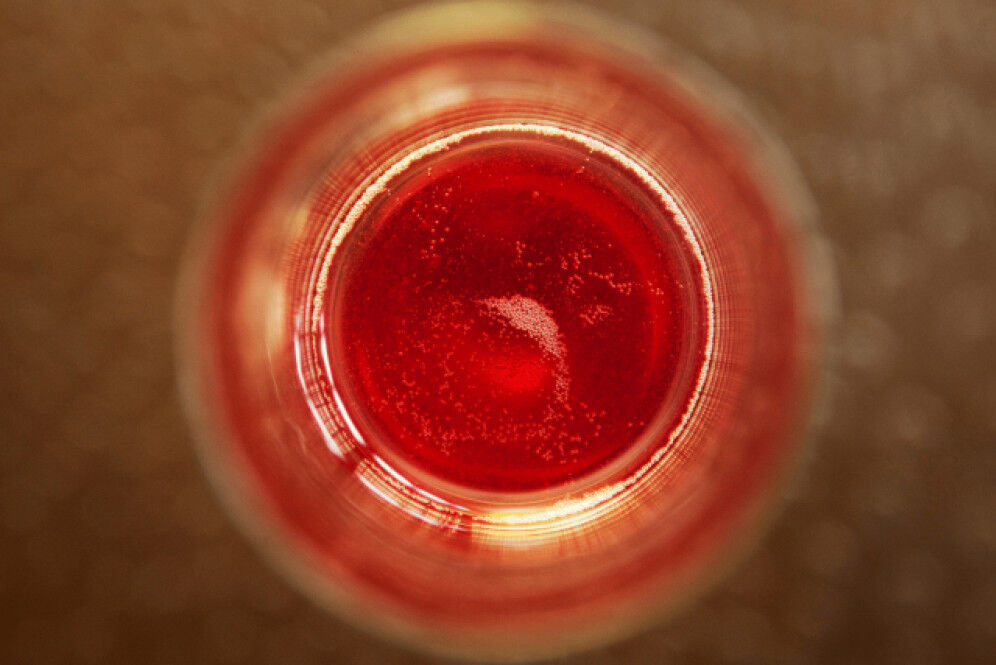
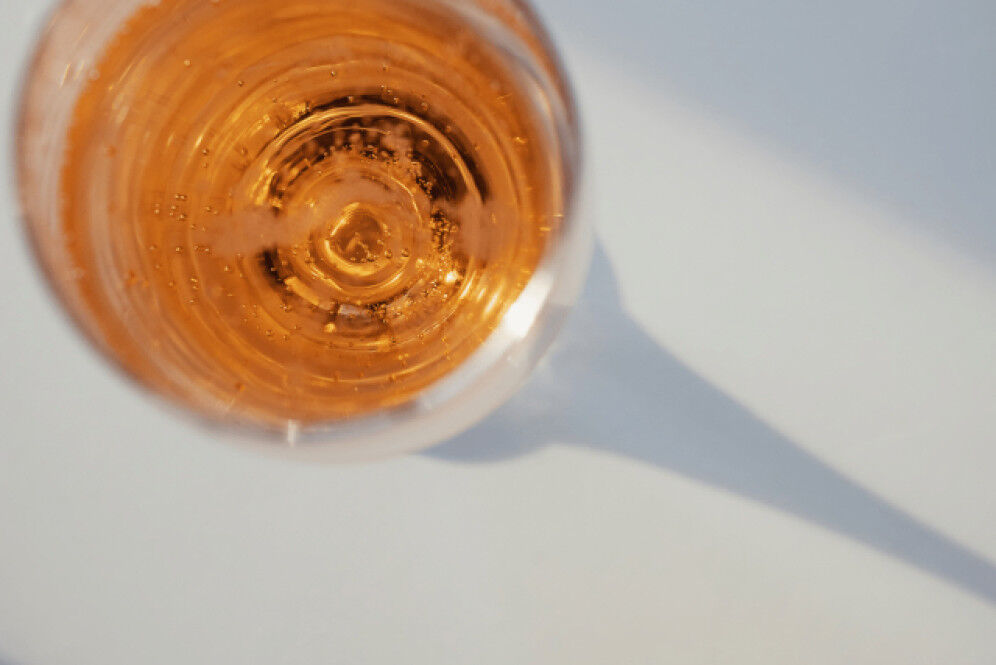
Rosé d'assemblage is generally distinguished by clear, pure colors ranging from salmon hues to luminous pinks from the spectrum of red berries.
There are two broad categories of taste: a delicate, refreshing Rosé Champagne with crisp, tart notes of red berries like raspberry or redcurrant, fragrant floral aromas or even citrus notes; or a cheerful, fruity Rosé Champagne with lots of juicy notes of ripe - or overripe - summer red fruits like strawberry, cherry or blackberry.
Of course, there are many other aromas you can find in your rosé champagne, depending on the individual blend of grape varieties, terroirs, reserve wines, dosage and other winemaking choices such as the use of oak, etc., but the two sub-categories described can help you find your personal rosé style.
Here's a selection of delicious champagnes made using the rosé d'assemblage method:
Delicate, refreshing rosé champagnes to discover:
- Champagne Pierre Gimonnet Rosé Brut 1er Cru Rosé des Blancs
- Champagne Billecart-Salmon Rosé Brut
- Champagne De Sousa Brut Rosé
Happy, fruity rosé champagnes to discover:
- Champagne Deutz Brut Rosé
- Champagne Ruinart Brut Rosé
- Champagne Piper-Heidsieck Rosé Sauvage
Rosé de Saignée: champagne rosé with intensity and depth
Unlike the addition of red wine to a "white" cuvée obtained by a white wine vinification method, the rosé de saignée method follows a different process.
You may have guessed that saignée refers to blood in a broader sense. In fact, the term derives from the old medical term "la saignée" used to remove blood from a patient. In the case of Champagne rosé de saignée, however, the word happily refers to a deliciously tinted must that is drawn from macerated grapes. But let me tell you more...
The starting point for the production of rosé de saignée is a red wine vinification process. The grapes are poured into a vat, barrel or other fermentation vessel and left to macerate for some time.
Under their own weight, the first berries soon split, and as fermentation takes hold, other berries open up and release their juice. The color pigments inside the berry skins gradually tint this juice, known as "jus de goutte", and the must naturally takes on a pink color that intensifies the longer the grape skins are in contact with the juice.
As over-extraction can occur quickly, this process can be quite taxing for winemakers. Throughout the maceration process, they meticulously monitor the evolution of color, intensity and tannin extraction - and it's not uncommon to spend sleepless nights beside the maceration vat to achieve the perfect result. Depending on the vintage, grape quality and degree of ripeness, this maceration phase can last from a few hours to 48 hours, or even longer in rare cases.
Once the desired result has been achieved, there are two different ways of proceeding, creating two distinct styles. Both styles are commonly referred to as rosé de saignée on champagne labels, but some producers specify the term rosé de macération to distinguish the styles.