
Why decant a wine?
Decanting is useful for young wines.Its contact with the air allows it to oxygenate or aerate, developing its aromas, releasing flavors, softening tannins and giving a little more fullness to a closed wine.
For champagne, the principle is the same: aeration can be beneficial to the wine, sometimes slightly attenuating the liveliness of the bubbles, which can sometimes be annoying.
Billecart-Salmon
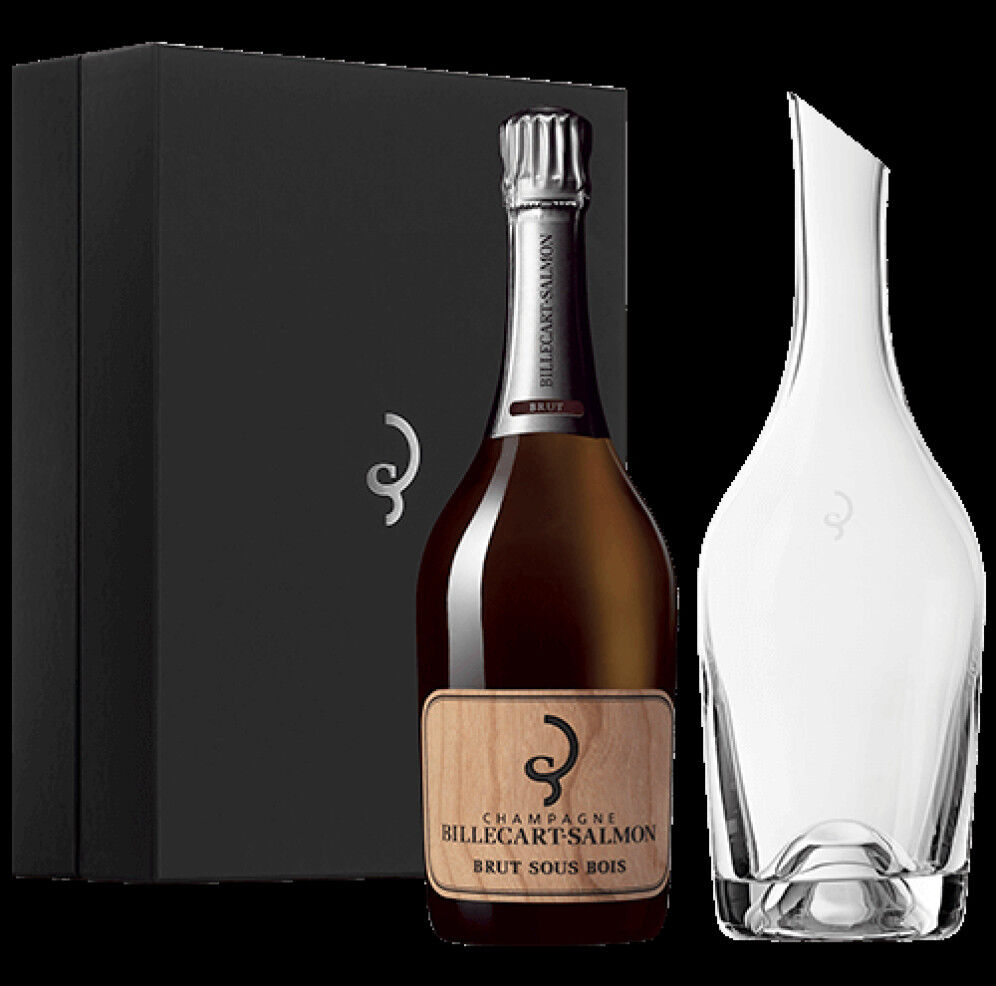
BILLECART-SALMON considers decanting champagne to be an art in itself.Tony Moinnereau, the House's Sales Director, made a video in the gourmet restaurant l'Oiseau Blanc at The Peninsula Paris to demonstrate this art to as many people as possible.
The brut sous-bois cuvée, with its great freshness and aromatic richness, was even offered in a box containing an elegant decanter inspired by the shape of the original bottle created in 1818. The elegance and refinement of Billecart-Salmon champagne are fully expressed by the delicate process of decanting.
Baccarat and Jean-Charles Boisset,
In 2020, Burgundy winemaker Jean-Charles Boisset, the world's largest wine producer by volume, is collaborating with the prestigious French crystal maker Baccarat on a collection of champagne glasses and decanters with cone-shaped stoppers like those into which the grapes flow when the harvest arrives.(editor's note: photo on front page).The explicit name "Passion Collection" is a glory to French refinement." The champagne decanter is round like a bubble, in order to release 20% of the effervescence in addition to the 20% that goes away when it's opened," explains Jean-Charles Boisset for Terre de Vins magazine. This allows maximum oxygenation for fine, creamy bubbles ". This exclusive creation enhances the finesse of the bubbles and reveals the depth of the aromas.
A few rules to follow
- Only decant champagnes that are young, lively and of good quality.
- Taste first to decide whether decanting is really necessary. If the wine is marked by reduction or really closed, take out the decanter.
- Another tip to find out if your champagne needs decanting: pour yourself a glass and taste the champagne, then taste it again after 15 minutes. If you prefer it to the second tasting, go ahead and decant it!
- Decant for a short time: generally speaking, 15 minutes is enough for a champagne to open up fully.
- Use a decanter of the right shape, not too flared and rather narrow, so that the contact between the air and the liquid is as small as possible. In this way, you oxygenate the sparkling wine without killing its bubbles.
- To avoid losing too many bubbles, chill the decanter in the freezer.
- Pour in a little champagne to moisten the walls and prevent too many bubbles from forming because the walls are too dry. Transfer gently, without rushing.