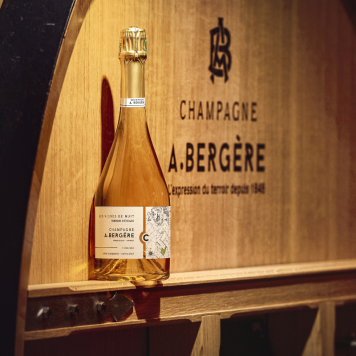
How should you store, serve, and enjoy a Blanc de Blancs champagne?

Publié par Julie Espirac-Noyelle - 24/08/2026 - Champagne World

Served chilled in a glass that allows all its bubbles to escape, a Blanc de Blancs champagne reveals only a tiny fraction of its potential. Yet, when properly stored, opened, and served, it is one of the most elegant champagnes there is.

In this article, we’ll explore together how to store it under the best conditions, at what temperature to serve it, in which glass to enjoy it, and, most importantly, with which dishes to let it shine at the table...

What is a Blanc de Blancs Champagne?

A Blanc de Blancs is a sparkling Champagne wine made exclusively from white grapes, primarily Chardonnay. No red grapes (Pinot Noir or Meunier) are used in its production. Its name literally means “white made from white grapes” and guarantees this varietal purity, as stipulated by the Champagne AOC regulations.

Serving Temperature and Glassware for Blanc de Blancs

The golden rule is to never serve a Blanc de Blancs too cold. Served at 4°C, you won’t be able to detect any of the aromas: the cold numbs the taste buds and freezes the aromatic molecules. Served at 12°C or higher, the opposite occurs: the effervescence fades, the champagne loses its liveliness, and the warmth intensifies the alcohol. The ideal range is therefore between 8 and 10°C, ideally around 9°C for a fine Blanc de Blancs. To achieve this, you have two options: take the bottle out of the refrigerator 5 to 10 minutes before serving, or use an ice bucket with a mixture of water and ice to gradually chill the bottle.

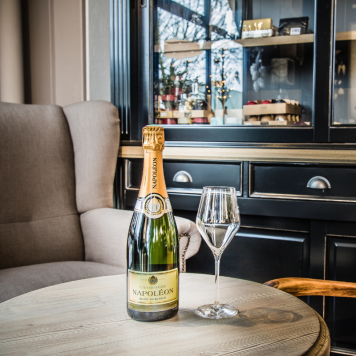
As for glasses, your choice directly affects your tasting experience. Forget the coupe—a relic of the Roaring Twenties that disperses the aromas and accelerates the loss of effervescence: an oenological crime when it comes to a great Blanc de Blancs. Opt for the traditional flute, which concentrates the effervescence and allows you to admire the stream of bubbles, or better yet, a tulip-shaped glass that’s slightly wider halfway up. The latter offers the best compromise: it lets the aromas breathe while preserving the bubbles’ vitality.

Opening and Serving According to the Rules

A bottle of champagne should be opened gently, never with a theatrical “pop.” This spectacular burst, while certainly festive, actually signals a loss of effervescence and carries the risk of spillage. The correct technique calls for finesse: first remove the aluminum cap and loosen the wire cage, always keeping your thumb on the cork for safety. Next, hold the bottle at a 45-degree angle, with the neck pointing away from your guests, and rotate the bottle (not the cork!) while holding the cork in place with your other hand. The gas will then escape with a soft, almost inaudible hiss, indicating a controlled opening. Finally, pour in two stages to prevent the foam from overflowing: a first pour to fill the glass, a pause to let the foam settle, then a second pour to top it off.
Should you keep a Blanc de Blancs in your wine cellar?

This is one of Chardonnay’s greatest strengths: its truly remarkable aging potential. A vintage Blanc de Blancs Grand Cru can age beautifully for 10 to 20 years, depending on the vintage—or even longer for the greatest cuvées from the finest terroirs of the Côte des Blancs. Some legendary cuvées, such as Salon or Krug Clos du Mesnil can even span several decades without losing any of their vibrancy.

But be aware: not all Blanc de Blancs are meant for aging. If you want to enjoy the primary freshness and characteristic aromatic liveliness of young cuvées, drink your bottle within 2 to 5 years of its release. If, on the other hand, you’re looking for complexity—notes of toasted brioche, dried fruit, and honey—let it age in the cellar under the right conditions: a stable temperature around 10–12°C, proper humidity, and the bottle stored horizontally away from light. The reward will be worth the wait.

Blanc de Blancs Champagne and Food Pairings

Seafood and Shellfish: The Ultimate Pairing

It’s the ultimate pairing, timeless and universally acclaimed by all sommeliers. The salty freshness of Blanc de Blancs harmonizes perfectly with the briny notes of seafood and the delicate flavor of shellfish. Oysters are the most iconic example: whether they come from Marennes-Oléron, the Côtes d’Armor, or the Arcachon Bay, their briny character and meaty texture pair wonderfully with the chalky minerality of a great Blanc de Blancs. The marriage of the terroir’s saltiness with that of the sea creates true harmony on the palate.

When it comes to shellfish, the possibilities are endless: pink shrimp, langoustines grilled à la plancha, grilled jumbo shrimp, and scallops simply sautéed in butter. Not to mention crab, spider crab, lobster, or spiny lobster for special occasions. The general rule is to opt for simple preparations that let the ingredients shine, rather than overly rich sauces that would overwhelm the wine’s delicacy.

Fish and Raw Preparations

Blanc de Blancs also pairs wonderfully with fish, provided you choose the right species and preparation method. Delicate white fish are its best companions: line-caught sea bass, sole meunière, poached turbot, and grilled gilthead sea bream. These fine, delicate flanks find in Champagne Chardonnay a partner worthy of them, one that complements them without overpowering them.

Salmon deserves special mention: whether poached or simply smoked, it pairs superbly with a Blanc de Blancs, provided you avoid overly strong marinades. But it is undoubtedly with raw preparations that the pairing becomes most exciting. Sushi and sashimi, Peruvian ceviche, fish tartare with kaffir lime, scallop carpaccio: all these dishes seek precisely the freshness and aromatic precision that a Blanc de Blancs naturally offers.

Poultry, Cheeses, and Other Bold Pairings

To venture off the beaten path, several less obvious pairings are worth trying. A simply seasoned roast poultry, such as a Bresse chicken or free-range guinea fowl, can be an absolutely delicious accompaniment to a Blanc de Blancs that has aged slightly. The roundness of mature Chardonnay complements that of the tender meat, with an elegance that few pairings can match.

Grilled asparagus—a classic sommelier’s nightmare due to how difficult this vegetable is to pair with wine—finds an ideal partner in Blanc de Blancs: the champagne’s minerality pairs perfectly with the vegetable notes of the asparagus. When it comes to cheese, forget soft cheeses; opt for hard, aged varieties: a 24-month-old Comté, crumbly Parmesan Reggiano, or aged Gruyère. The pairing of the wine’s crystalline clarity with the rich umami of these cheeses is a true revelation.

Finally, don’t overlook the obvious: Blanc de Blancs remains the quintessential aperitif champagne, pairing wonderfully with light appetizers, a platter of seafood-inspired tapas, fresh cheese bites, or simply a few toasted almonds. One final word of caution, however: avoid dishes that are overly spicy, rich creamy sauces, or rare red meats, as the Blanc de Blancs’ delicacy would simply be overwhelmed. Save it for delicate dishes where it can truly shine.

Partager
Trusted Reviews
97% of satisfied customers
Shipping 24H
Order before 11AM
Gift Message
free
+ 1200 références
in stock
Storage
Hydro-regulated
Secure Payment
Credit Card, Amex, Paypal, Bank transfer
Added to cart !
Limité à 3 bouteilles. Nous les avons ajoutées à votre panier.
Quantity
Continue shopping