What exactly is champagne color?
The color champagne is a mixture of yellow and orange, close to beige, located on the inner, paler part of the chromatic circle. It's a warm but luminous color - a light gold with subtle orange highlights - that naturally evokes the effervescence and elegance of the drink from which it takes its name.
The Larousse definition is simple: "a golden yellow color reminiscent of champagne". The champagne hue lies somewhere between ivory and cream, with the particularity of being slightly warmer and more golden than pure ivory.
It should be noted that the Comité Interprofessionnel du Vin de Champagne (CIVC) is categorical on one point: the color "champagne" does not officially exist on the beverage side. As the organization explains, Champagne wines present far too many different nuances for it to be possible to retain this word for a precise color". The Larousse, fashion, decoration and graphic design don't seem to agree, and for good reason: this hue has a real visual identity, recognized the world over.
Warm or cool?
Champagne is a warm color. Its yellow base is softened by the warmth of orange, giving it its characteristic luminosity without aggression. It symbolizes refinement, luxury, joy and clarity - all positive values that explain its success in design and interior decoration.
Champagne vs. ivory: what's the difference?
This is one of the most frequently asked questions. Ivory is a slightly creamy white color, very cold and pale. Champagne, on the other hand, is warmer, more golden, with a subtle orange tinge that makes it look like golden beige. A champagne wedding dress will therefore have warm, golden nuances clearly visible, whereas ivory will remain very close to white.
Champagne color codes
It's important to note that there is no single, universal champagne color code - which is perfectly logical, since the hue itself covers several shades, depending on the context. There are two main reference families:
The pale, luminous "digital" champagne color
This is the reference most commonly used in graphic design, on platforms such as Canva, Figma or Adobe Express. It corresponds to the color of champagne in the glass: pale, luminous, with subtle orange highlights.
Hex code: #F7E7CE, RGB: R 247 - G 231 - B 206, HSL: 35° / 80% / 89%, CMYK: C 0 - M 7 - J 17 - N 3
The "deco and fashion" champagne color, golden and deep
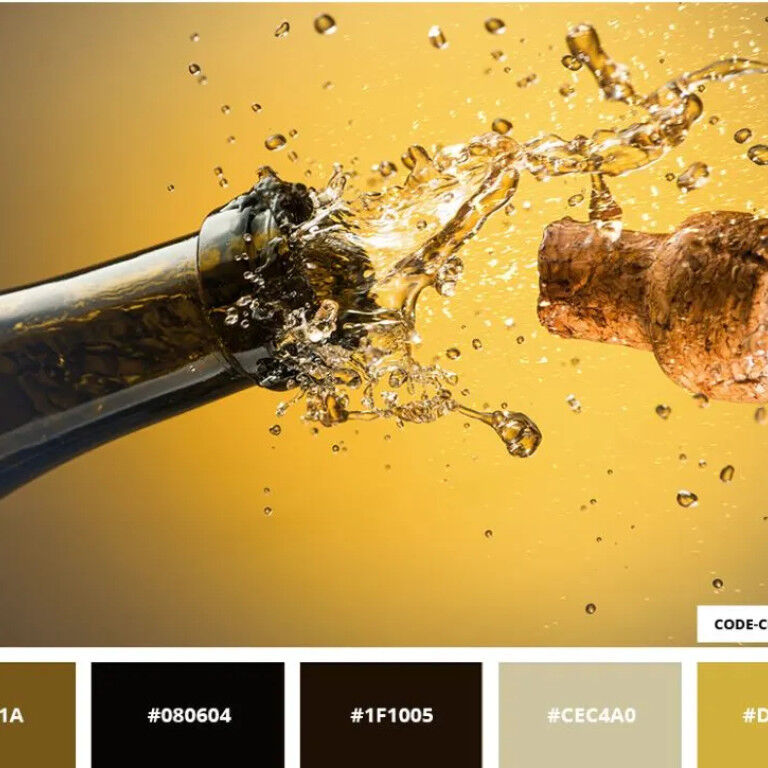
This is the benchmark color for interior design, textiles, fashion and paint. It corresponds to a deeper, warmer shade, closer to bronze gold, inspired more by the champagne bottle, label or metal than by the wine itself.
Reference codes according to this color chart (source: code-couleur.com):
- #B7A680: champagne gold, the main shade in this family
- #826730: champagne bronze, more intense
- #704919: golden-brown champagne, very deep
- #311B11: deep, almost brown champagne
- #040404: associated contrast (black)
Pantone and Benjamin Moore
At Pantone, there is no longer a "Champagne" color as such since 2015: the name associated with 14-1012 Champagne Beige has been replaced by Golden Beige in the Fashion, Home + Interiors system.
At Benjamin Moore, the color champagne does exist under the code HC-93, an elegant, refined hue, compatible with warmer colors such as Brick Red (2084-10) or Mediteron (AF-395).
The ISCC-NBS system
Between 1955 and 1976, the Inter Society Color Council (ISCC) and the National Bureau of Standards (NBS) in the United States created a system of colors for art and science, to establish a linguistic classification of colors. For champagne, this system lists several codified shades: 73 (M/TC), 79 (M), 89 (P), 90 (M) and 93 (M), ranging from pinkish beige to pinkish gray, consistent with the diversity of expressions of this color.
Key pointsto remember: for use in digital design, start with #F7E7CE. For a decor, fashion or textile project, refer instead to #B7A680 and its variants. Both are accurate - they simply describe two different facets of the same color.
Champagne shades
Champagne is a family of shades, not a single color. Depending on the context - wall paint, graphic design, fashion or interior design - there are several main shades:
- Classic champagne (#F7E7CE): luminous pale gold, the benchmark
- Champagne beige: more neutral, very similar to sand and linen
- Champagne doré: more intense, with warm golden reflections, close to honey
- Champagne rosé Slightly pinkish shade, very popular for fashion and weddings. Read our full article on making a rosé champagne.
- Champagne white near-white with a subtle creamy warmth, used in murals to bring softness to interior spaces.
- Champagne or crème: somewhere between classic champagne and crème, widely used in decoration.
By the way, it's important to point out that champagne is neither brown nor really pink: it's primarily pale yellow and warm, with a discreet touch of orange that gives it its luminous signature.
Champagne in design and decoration
Graphic design
Champagne is a sure bet in graphic design: it evokes elegance, accessible luxury and sophistication without heaviness. It is used for soft backgrounds (champagne beige background), color palettes for festive events, premium interfaces or high-end branding materials.
Champagne color combinations that work well:
- Champagne + gold + ivory: the festive palette par excellence, widely used for weddings and events
- Champagne + mauve: softness and sophistication, very much in vogue in interior design
- Champagne + navy: elegant contrast, inspiring confidence and seriousness
- Champagne + emerald green: freshness and luxury, a very contemporary combination
- Champagne + burgundy: warmth and depth, ideal for premium visuals
- Champagne + black: classic and striking for high-end communications
- Champagne + silver: the natural combination for accessories and festive objects
To create a champagne palette in design, tools such as Canva, Figma or Adobe Express offer useful palette generators based on hex code.
Interior design
Champagne is an enduring trend in interior design. It can be used in wall paint to bring warmth and light without aggression, in wallpaper to create a cosy, elegant ambience, or on textiles (sofas, curtains, cushions) to unify a living room space.
What's important to remember is that champagne behaves differently in different lighting conditions: in natural light, it appears more golden and luminous; in warm artificial light, it turns slightly beige; in cold light, it can appear almost ivory. Always test a sample on your wall before deciding.
The most successful decorating combinations:
- Champagne + natural wood: organic, timeless warmth
- Champagne + white: clarity and lightness for small spaces
- Champagne + light grey: minimalist Scandinavian elegance
- Champagne + blush pink: soft, sophisticated romanticism
Where does the color champagne come from?
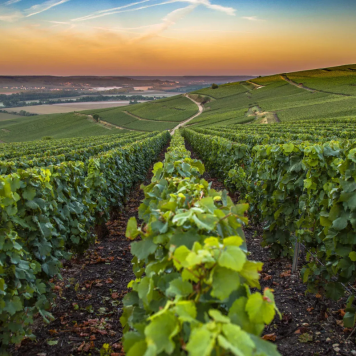
Champagne color naturally takes its name from the Champagne region and its emblematic sparkling wine. It was in the 19th century, with the rise of the great champagne houses and the gradual democratization of this festive beverage, that the luminous golden hue of the wine in the glass began to establish itself as an aesthetic reference in popular culture.
Eugène Mercier, founder of Maison Mercier in 1858, played a pioneering role in the democratization of champagne and, with it, of the entire visual and cultural imaginary surrounding the drink: gold, bubbles, light, celebration. It was this imagination that gradually gave rise to the color champagne as we know it today in design and fashion.
Today, the color champagne is associated in the world's visual culture with accessible elegance, festive celebrations, discreet luxury and luminous joy. A trendy color that has stood the test of time without ever going out of fashion.
The color of real champagne in your glass
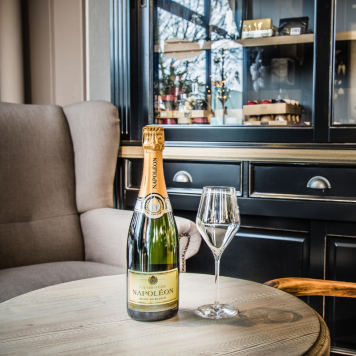
We couldn't talk about the color of champagne without mentioning the real color of champagne, the one you pour into a glass!
And here's a surprise: the color of champagne is anything but uniform. It varies considerably according to several parameters:
- Grape variety: a Champagne made predominantly from Chardonnay (Blanc de Blancs) will be pale, with green or silvery highlights. A Champagne made predominantly from Pinot Noir will be more golden and intense.
- Vinification: champagnes vinified in oak barrels develop deeper, more amber hues than those vinified in stainless steel tanks.
- Maturing and ageing: the longer a champagne is aged on laths, the more its color evolves towards intense golden tones, then amber. An old vintage may have a deep gold color, far removed from the pale champagne we usually imagine.
- Dosage: a champagne with very little dosage (Brut Nature) will often be paler and tauter. A full-bodied champagne will be more generous, with warmer reflections.
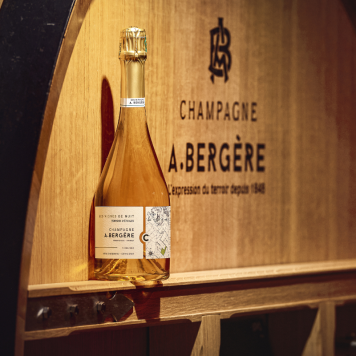
- Champagne rosé: depending on the production method (blending or bleeding), the color ranges from pale salmon pink to deep pink with orange highlights.
In conclusion: the color nuances of true champagne are almost infinite, like the many different dresses our eyes discover each time we open a bottle. That's what makes this drink so fascinating to observe, even before you taste it.
Alcohol abuse is dangerous to your health. Drink in moderation.