#1 - Champagne? And how!
With 2 record years for shipments (326 million bottles) and sales of 6 billion euros, Champagne continues to record historic export sales. This post-Covid dynamism, despite the growing attractiveness of certain local sparkling wines, is due to two factors: an increase in the frequency of consumption by the glass and a broadening of consumption occasions.
Sacralizing the wine, desacralizing the moment
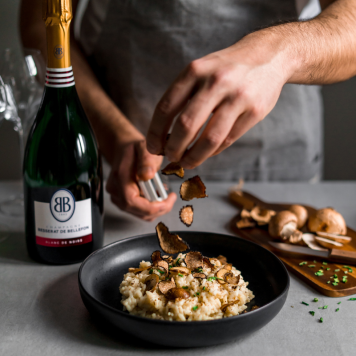
Traditional celebrations (such as the end-of-year festivities) and special occasions (weddings, christenings, communions, etc.) are being joined by more epicurean and spontaneous celebrations. In fact, it's becoming less and less rare to see the King of Wines stripped off in the evening, at an afterwork party to unwind after a busy day, or slipped into a travel bag to brighten up an impromptu weekend. Buoyed by its magnetic image and worldwide popularity, Champagne is a chameleon wine that appeals to both formal luxury and informal class. In short, it shines on every occasion.
#2 - Exclusivity, excellence and rarity
And it's precisely this aura that sets it apart from other sparkling wines. Whether it's physically isolated in a universe of its own, or "drowned" among other sparkling wines, it remains unique in the discourse of all prescribers. Most of them even declare that they regularly lack the technical knowledge to appreciate the variety and diversity of Champagne wines.
By strengthening relationships with these natural ambassadors, and regularly inviting them on a voyage of initiation to sacred lands to learn about dosage, fermentation, terroirs, soils, exposure, grape varieties and blends, they will be better able to demonstrate the unique, exclusive and rare character of this great wine, and justify its price.
#3 - Towards an ever more virtuous Champagne
A forerunner in sustainable viticulture, the Champagne industry has been committed for many years to limiting inputs, enhancing biodiversity and landscapes, treating effluents and by-products, and reducing its energy and carbon footprints.
Although not necessarily enshrined in the official specifications, the AOC has nevertheless set itself a number of ambitious targets: "zero herbicides by 2025", "100% of farms certified by 2030" and "the reduction of its total emissions by 75% by 2050".
To achieve this ambition, leaving no one behind, in 2014 the Comité Champagne set up a certification called VDC" for Viticulture Durable en Champagne. In 9 years, 14,700 hectares of the appellation's 34,000 hectares (43%) are already VDC-certified.
In parallel, a more general certification also exists in Champagne: the "HVE" (Haute Valeur Environnementale) label set up by the French Ministry of Agriculture. In addition, there are a number of labels testifying to highly committed viticultural practices, such as the "AB" label for wines produced using organic viticulture methods, or the "Demeter" label for biodynamic viticulture.
#4 - Future prospects
In an increasingly fluid, not to say uncertain, environment, how can Champagne maintain its visibility, its reputation and its desirability, both over time and in the minds of wine-lovers?
At this 5th edition of Champagne Market Trends, the Comité Champagne proposed a number of long-term actions to protect Champagne's image capital. In particular, the Comité Champagne suggested building a ritual of serving wine by the glass, reinforcing close ties with prescribers, ambassadors and influencers (the real ones), simultaneously promoting the brand AND the appellation in public discourse, without forgetting to continue working together without seeking to oppose or feed the dichotomies of this AOC full of paradoxes.
As you can see, in Champagne, promoting the appellation is everyone's business.
Cheers!